
What was here?
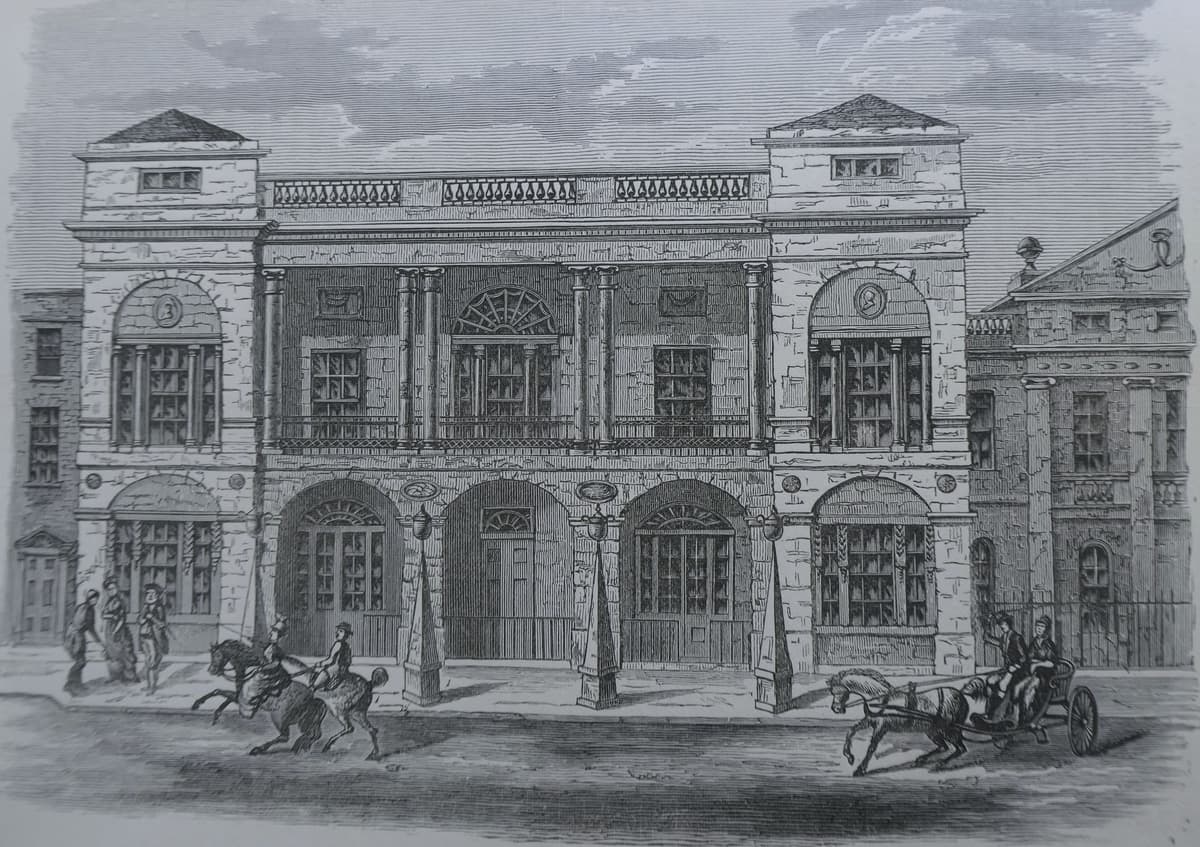
On New Street, opposite the bottom of Bennett’s Hill, stood the Theatre Royal: for nearly two centuries the town’s principal theatre, rebuilt again and again on the same plot.
History
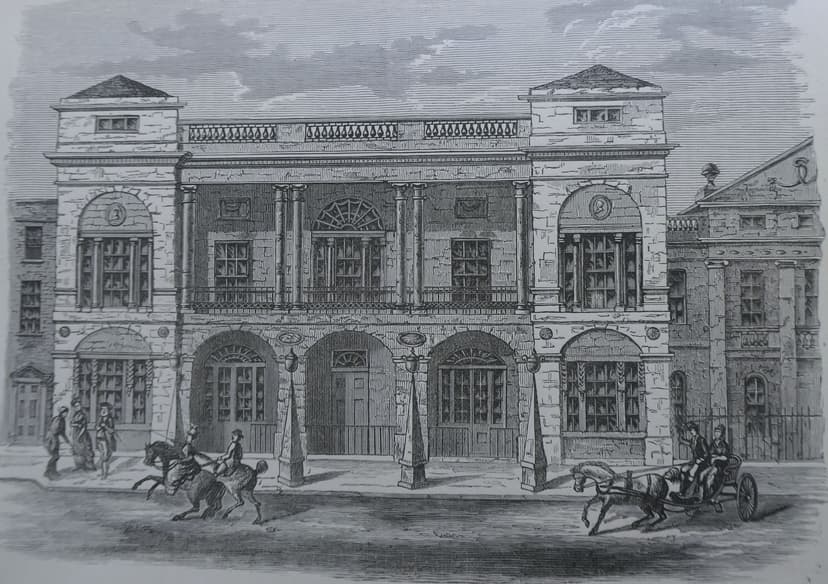
The first theatre on the site opened on 20 June 1774 as the New Theatre, built for Richard Yates at a cost of £4,000, according to Arthur Lloyd’s theatre history. Its great asset was its front. The Victoria County History says Samuel Wyatt’s classical façade was “far ahead of anything else in Birmingham at the time” for elegance.
Fire and rebuilding
The theatre burnt down on 17 August 1792, and again on the night of 6–7 January 1820. Each time it was rebuilt behind Wyatt’s front, which, the VCH notes, “survived the fires of 1792 and 1820 and was finally demolished in 1902”. That year the whole building was cleared, and a new Theatre Royal by Ernest Runtz, costing about £50,000 and seating more than two thousand, opened on 16 December 1904 with the pantomime Babes in the Wood.
The last night
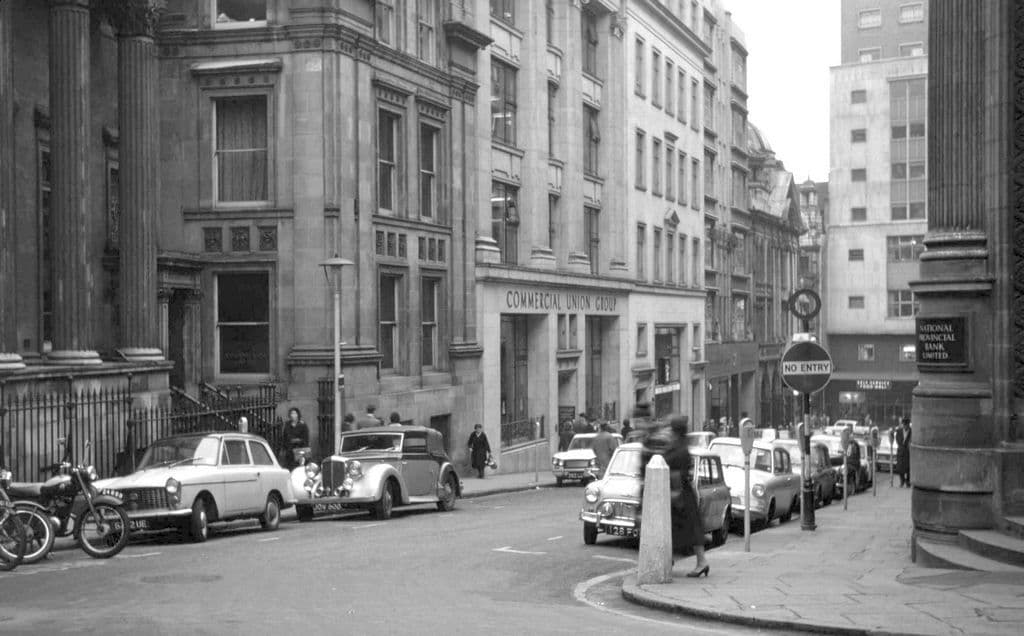
The theatre came through both world wars. Moss Empires took it over in 1929. But in 1956 its run ended. On 15 December, after the final performance of the Fol-de-Rolls, the curtain came down for good. One of the cast later remembered demolition starting backstage even as the show went on.
The next day’s Birmingham Post noted that the theatre’s two stone medallions of Shakespeare and Garrick, which had survived “two burnings and one demolition”, had been removed for a new theatre “expected to be erected on the Inner Ring Road”. That theatre was a hope, not a plan in the sources read.
Shops and offices
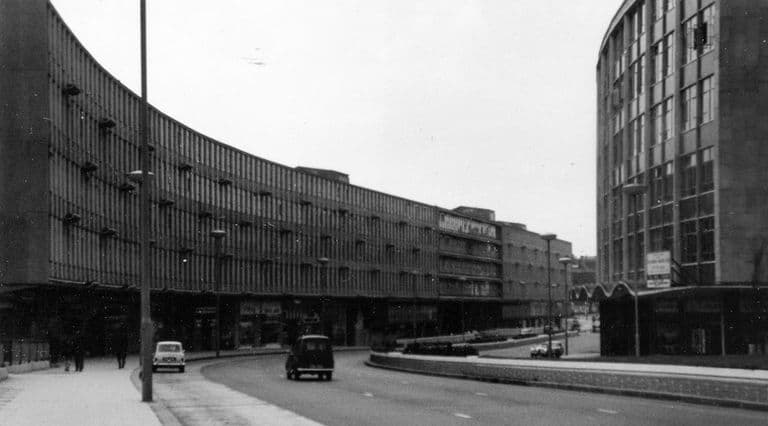
An office building, the Woolworth Building, rose on the site. Today a Birmingham Civic Society blue plaque at 102 New Street reads: “On this site stood the Theatre Royal 1774–1956.”
The Theatre Royal fell in the middle of Manzoni’s years, but not to his road. It went the way many city-centre theatres went in the 1950s, when the land under them became worth more than the shows on them.
What happened here?
Then The Theatre Royal, New Street (1774), Birmingham’s leading theatre, rebuilt after fires in 1792 and 1820 and wholly rebuilt in 1902–04.
What happened It closed after the last performance on 15 December 1956 and was demolished.
Why A commercial decision by its owners; no source read links it to the Inner Ring Road or any council scheme.
What replaced it An office and shop building known as the Woolworth Building.
Now Shops and offices at about 102 New Street, with a Civic Society blue plaque marking the site.
Why it mattered
For almost two hundred years this was where Birmingham went to the theatre, and Wyatt’s front was one of the finest Georgian façades in the town. Its loss is a useful corrective: not everything that disappeared in Manzoni’s Birmingham disappeared because of him.
Why it disappeared
Commercial redevelopment · Redevelopment
The theatre closed on 15 December 1956 and was demolished; an office building, the Woolworth Building, was later built on the site (Arthur Lloyd). The sources read do not give the owners’ reasons for closing it, and none connects the demolition to the Inner Ring Road or a council scheme.
The same spot, then and now
1888–1913
Today
Old map: Ordnance Survey six-inch, reproduced with the permission of the National Library of Scotland (CC BY 4.0). Today: © OpenStreetMap contributors.
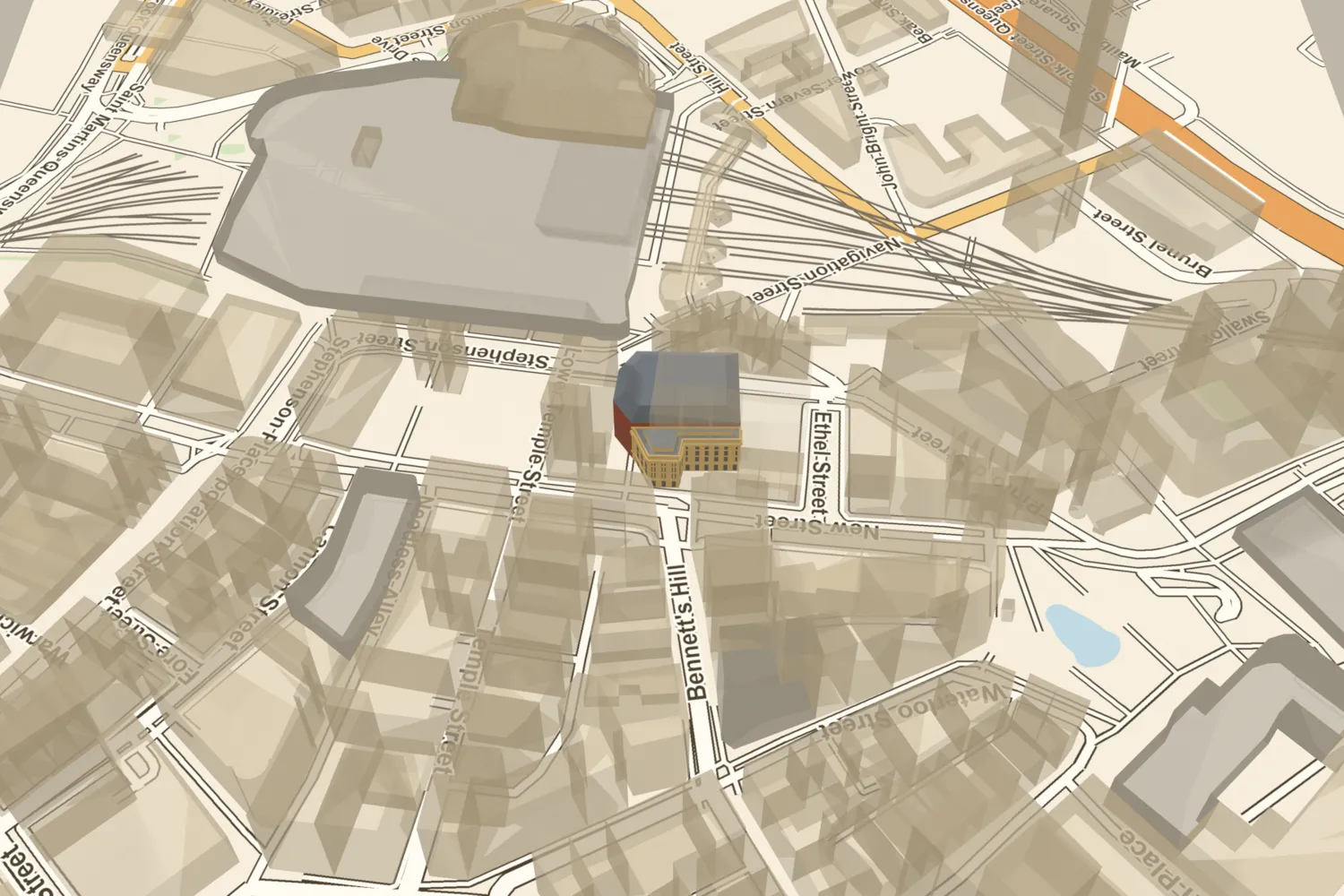
The Theatre Royal, on today’s streets
What’s there now
What replaced it
An office building known as the Woolworth Building, New Street (Arthur Lloyd); part of it was refurbished in 1990 with a prominent glass lift tower.
What survives
Stone medallions of Shakespeare and Garrick removed in 1956 (Birmingham Post, via Arthur Lloyd); their present whereabouts were not traced in the sources read. A Civic Society blue plaque marks the site.
Today
Shops and offices on the south side of New Street at about No. 102, near the bottom of Bennett’s Hill, with a blue plaque.
Then and now
Then · Published 1880
Now · 20 March 2016
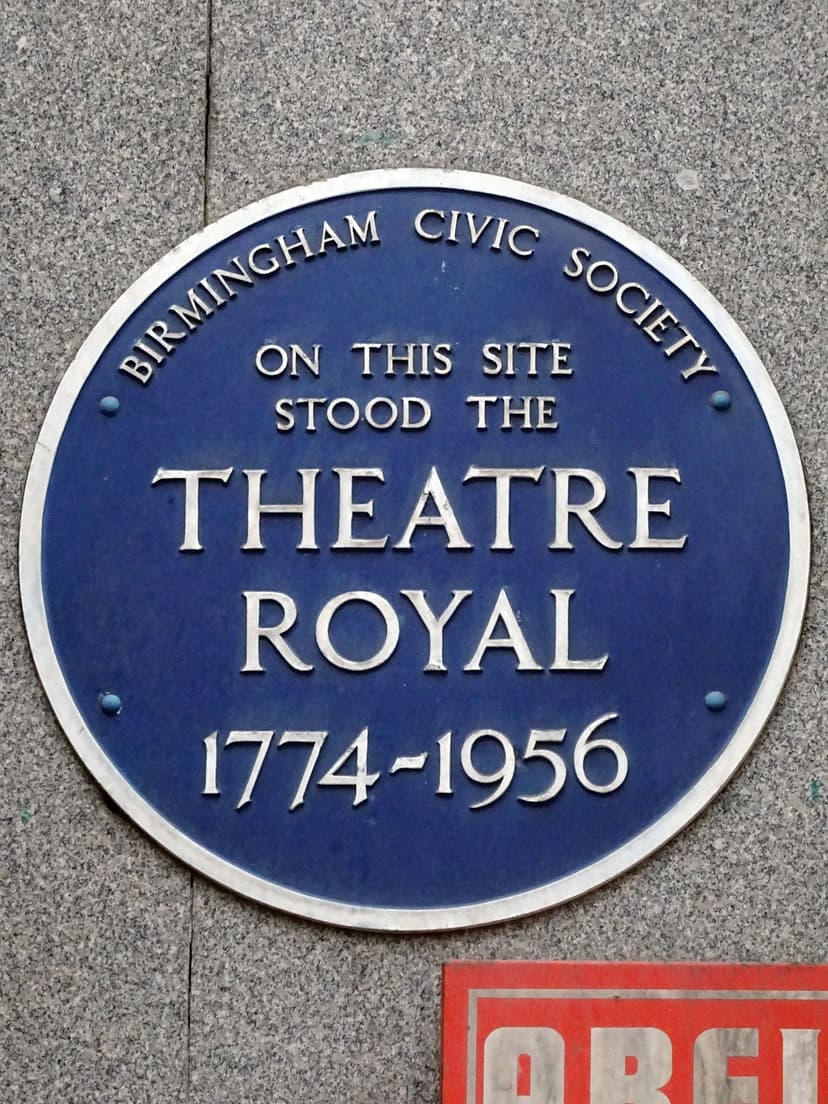
Today
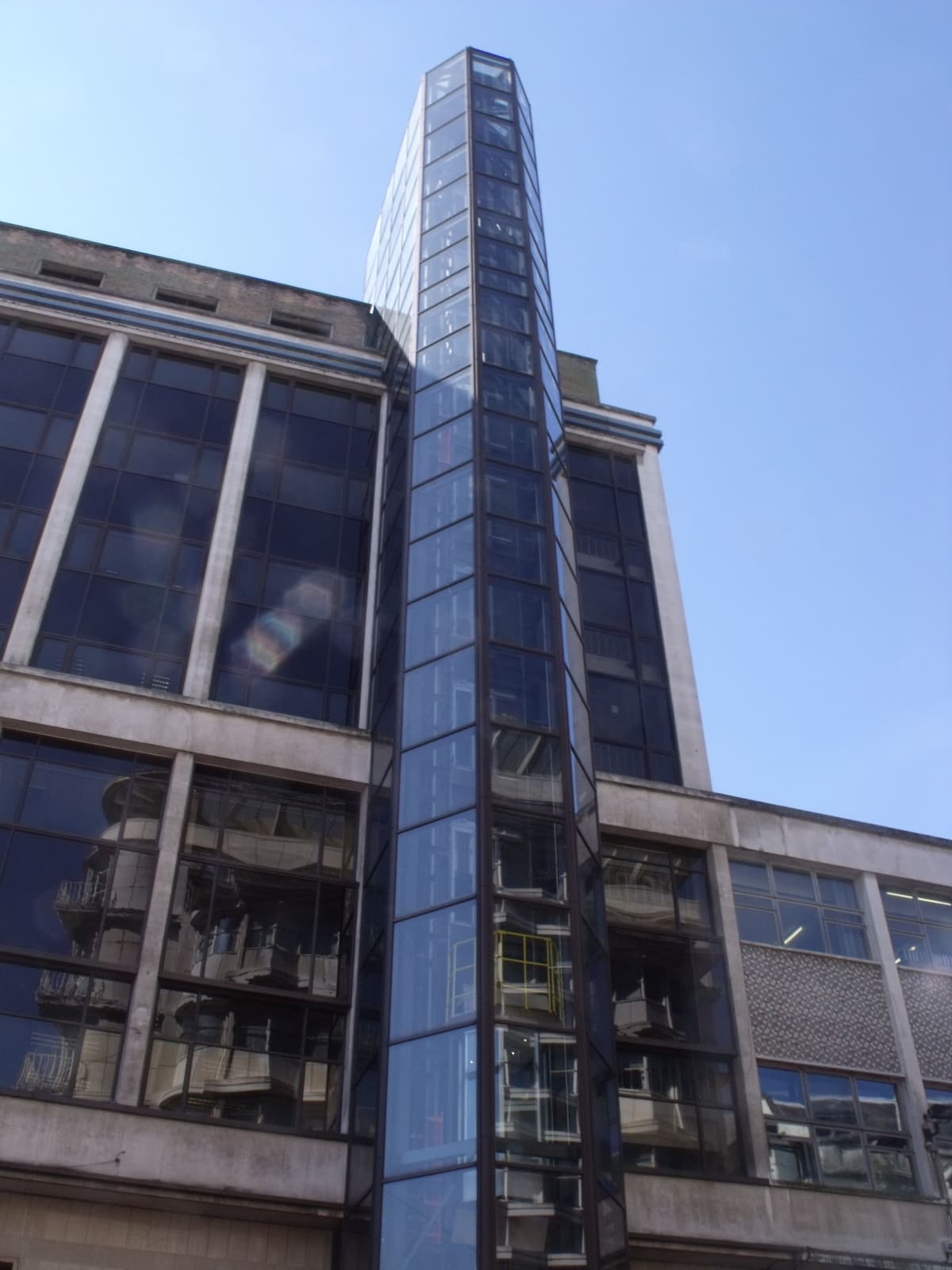
Woolworth Building, New Street, 2 May 20112 May 2011. Elliott Brown (Flickr) via Wikimedia Commons · CC BY 2.0
Key dates
- 20 June 1774 — Theatre Royal opens on New StreetThe New Theatre, later the Theatre Royal, opens on New Street, built for Richard Yates at a cost of £4,000.
- 15 December 1956 — Theatre Royal closesAfter a last performance of the Fol-de-Rolls, the Theatre Royal on New Street closes and is demolished. An office building, the Woolworth Building, later rises on the site.
Sources and further reading
The date of Wyatt’s façade: the VCH says it was designed in 1777; Arthur Lloyd says it was added in 1780. The text avoids giving a year.
Arthur Lloyd names the 1774 architect only as “Saul”; that has not been checked against Colvin’s Dictionary.
The reasons for the 1956 closure are not given in the sources read. The site’s later redevelopment for an office building suggests a commercial decision, but that is an inference.
The plaque is on the Charters Building at 102 New Street; whether that building is part of, or later than, the Woolworth Building has not been confirmed.
- The Theatre Royal, New Street, Birmingham — Matthew Lloyd, arthurlloyd.co.uk
- A History of the County of Warwick, vol. 7: The City of Birmingham — Secular Architecture, pp. 43–57 — W. B. Stephens (ed.), Victoria County History, 1964. pp. 43–57
Comments
Comments will load here.