
What is it?
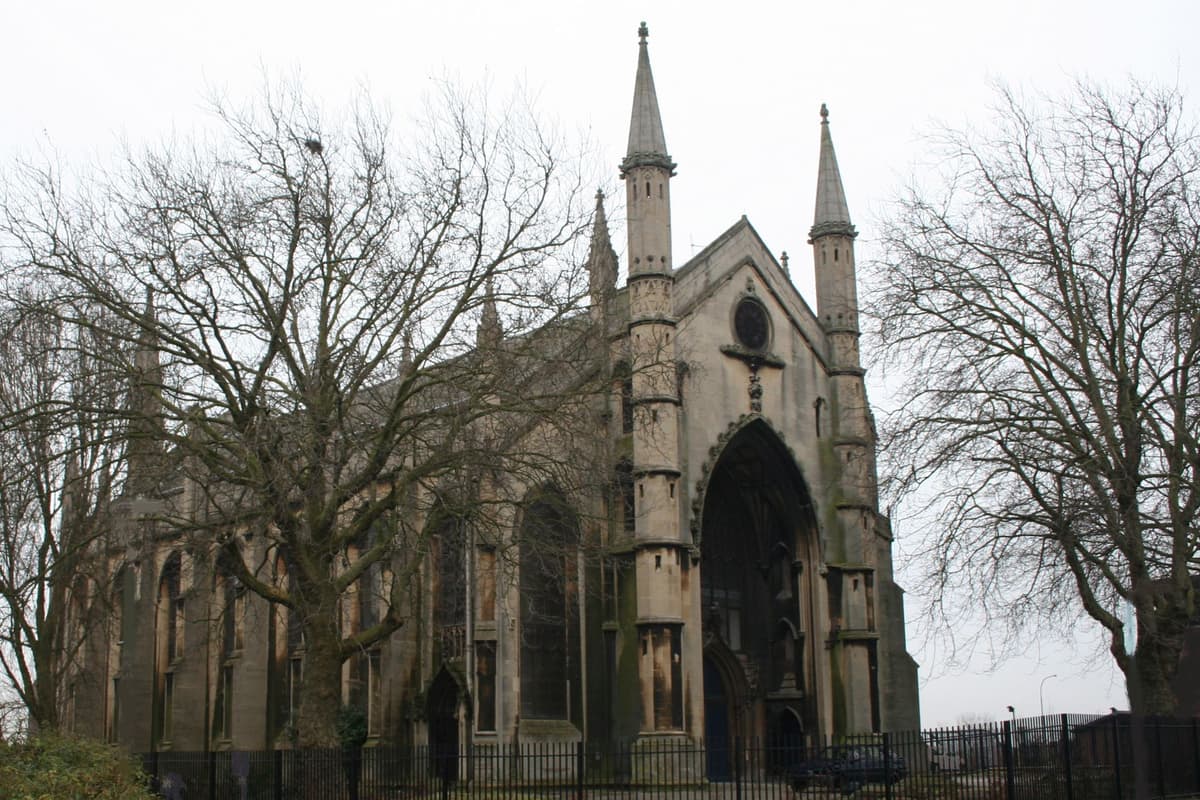
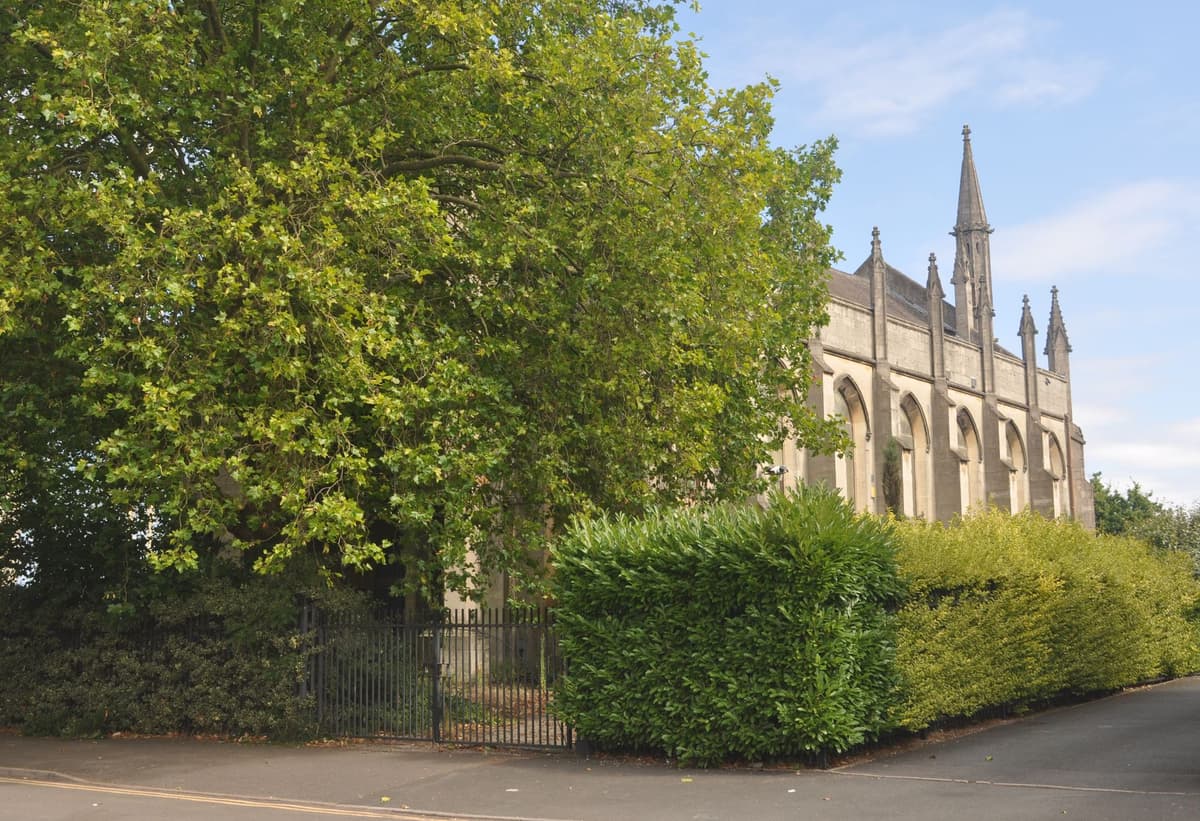
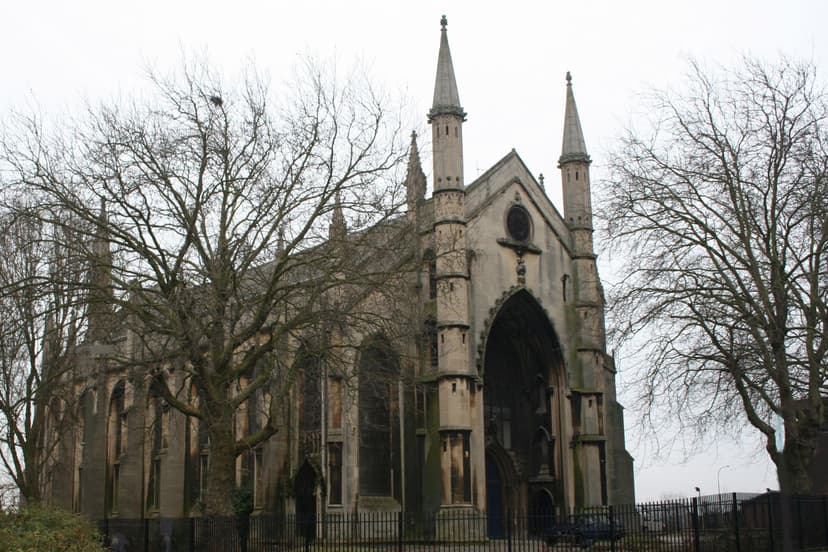
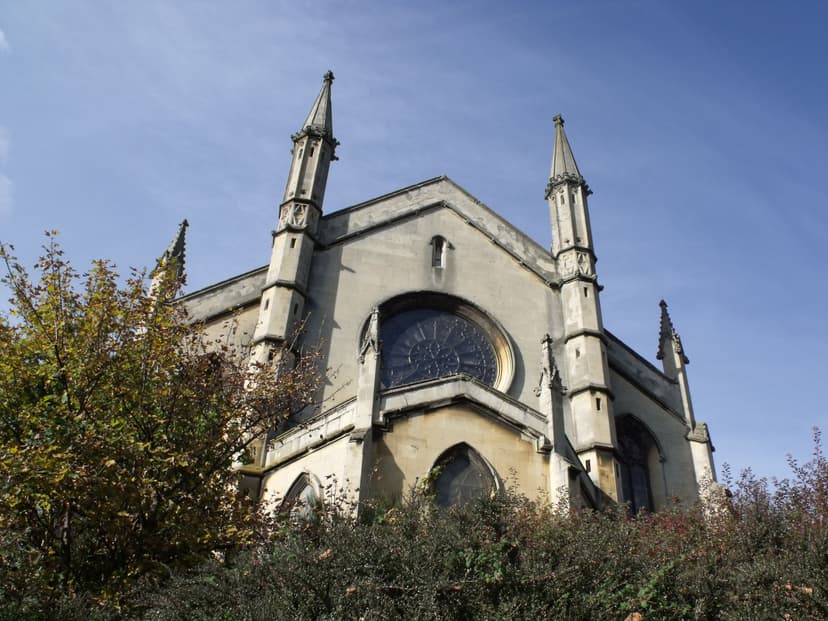
A Perpendicular Gothic church faced in Bath stone, with octagonal pinnacled turrets at the corners, pinnacled buttresses along the sides, a shallow canted apse at the east end and a deep recessed entrance under a tall arch at the west end. It stands on an island site at the top of Old Camp Hill.
History
A church for a new suburb
Under the Church Building Act of 1818, Parliament’s commissioners helped pay for new churches in the fast-growing towns. Bordesley, then part of the vast parish of Aston, got one of them. Francis Goodwin designed it. The first stone was laid on 29 September 1820, and Holy Trinity was consecrated on 23 January 1823. It opened for services on 16 March. Showell gives the cost as £14,325, for 1,500 sittings, half of them free.
Goodwin chose Perpendicular Gothic and faced the church in Bath stone. In plan it is a plain rectangle with a shallow canted apse. In elevation it is all drama: octagonal pinnacled turrets at the corners, pinnacled buttresses between the tall windows, and at the west end a full-height recessed entrance under a great arch, with cast-iron tracery in the window. It was said to be modelled on King’s College Chapel, Cambridge. Historic England calls it “a particularly good Commissioner’s church”.
Candles and a prison cell
Holy Trinity became a parish church in 1864. From the start, Showell wrote, its services had been “markedly of a Ritualistic character”, first under Joseph Oldknow, minister from 1841 to 1874, and then under Richard William Enraght. The complaints against Enraght included lighted candles, the alb and chasuble, mixing water with the communion wine, and wafers.
He was prosecuted under the Public Worship Regulation Act of 1874. In 1880 he was briefly imprisoned for ignoring a monition from the Court of Arches, and in 1883 he was deprived of his living. When his successor, A. H. Watts, read himself in on 11 March 1883, there were protests in the church.
The same spot, then and now
1888–1913
Today
Old map: Ordnance Survey six-inch, reproduced with the permission of the National Library of Scotland (CC BY 4.0). Today: © OpenStreetMap contributors.
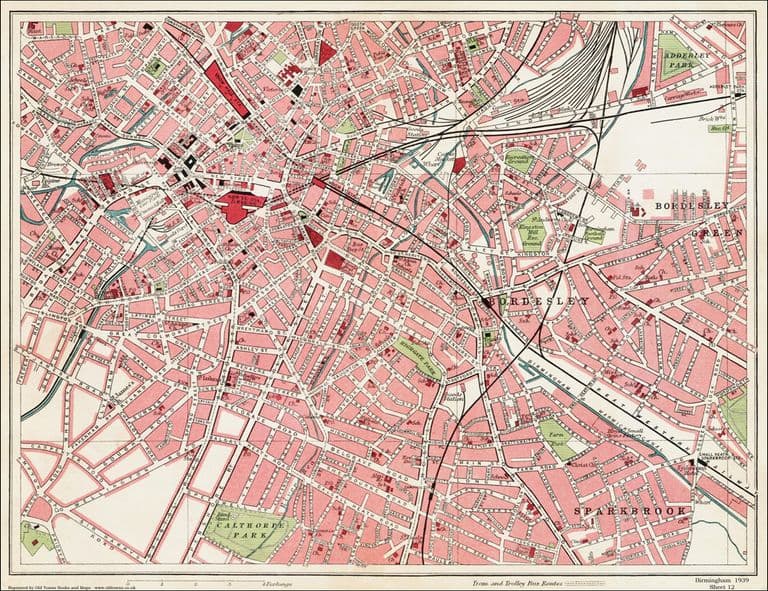
The parish grew new parishes of its own: Christ Church, Sparkbrook, in 1867, St Alban’s, Bordesley, in 1871 and All Saints’, Small Heath, in 1875. In 1875, too, cricketers from the church are said to have founded Small Heath Alliance, the football club that became Birmingham City.
Empty on its island
The church closed in 1968. A plan for an arts centre in 1969 and proposals to demolish it in the 1970s both came to nothing, and it was listed Grade II in 1970. For some years it was a shelter for homeless people, until about 1999. Since then it has stood empty. In 2014 it was offered for sale for conversion into homes.
The list entry describes an interior that was “exceptionally good … with all its fittings and galleries”, though the decoration has been stripped and a floor put in. Outside, the church is cut off on a traffic island between Old Camp Hill and Bordesley Middleway.
The streets of the Bordesley it was built for have gone, and the roads have been rebuilt around it more than once. Goodwin’s pinnacles are still sharp against the sky, waiting for someone to give the building a use.
Why it mattered
Holy Trinity is one of the best of the Commissioners’ churches built after 1818 for England’s growing towns, and Historic England picks it out as particularly good. It was a centre of Birmingham’s Anglo-Catholic movement, and the imprisonment of its vicar in 1880 made it the scene of the city’s best-known ritualism dispute.
Today
What replaced it
Not replaced; the church stands, empty.
What survives
The whole church, listed Grade II (list entry 1220436). Secondary accounts say its burial ground closed in 1873, that many gravestones were later removed, and that some remains were moved when the road beside it was widened.
Today
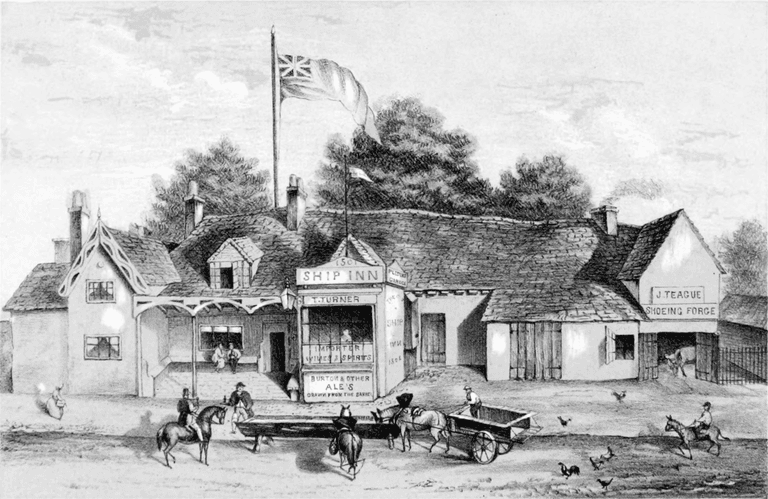
The church stands empty on an island site between Old Camp Hill and Bordesley Middleway, between Bordesley Circus and Camp Hill Circus. The site of the Old Ship Inn is about 180 m to the south.
Then and now
Then · 18 February 2009
Now · 10 October 2009
Today
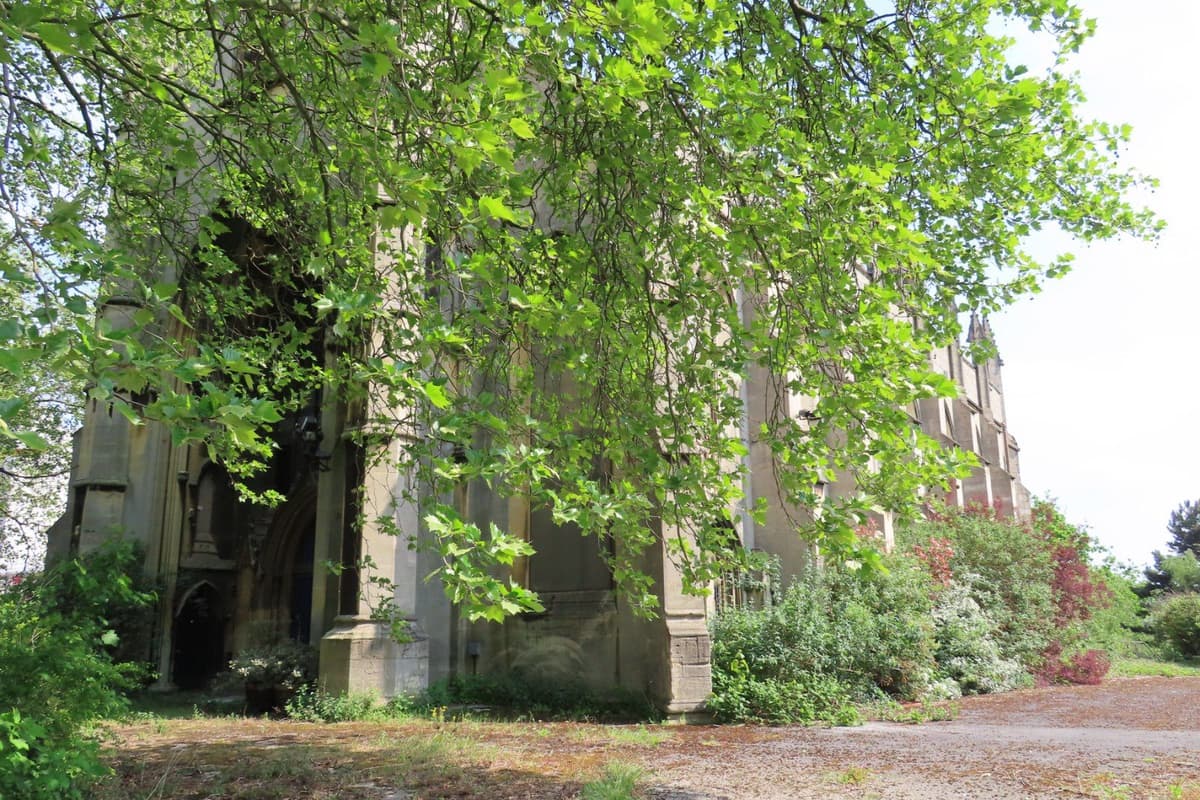
Holy Trinity Church, Bordesley, 2 May 2025Philip Halling, 2 May 2025. Geograph Britain and Ireland via Wikimedia Commons · CC BY-SA 2.0
Sources and further reading
Cost: £14,325 (Showell) or £14,235 (Wikipedia). The list entry dates the building 1820–22; it was consecrated in January 1823. The church closed in 1968 according to most accounts; one gives 1971. The dates and running of the homeless shelter are known only from secondary sources (“until about 1999”). The link with Small Heath Alliance rests on club histories. Height and width figures that circulate (45 ft high, 75.8 ft wide) are unsourced. The 2014 sale for conversion is known from a newspaper report cited by Wikipedia. Pevsner’s description has not been seen.
- A History of the County of Warwick, vol. 7: The City of Birmingham — Religious History: Churches built since 1800, pp. 379–396 — W. B. Stephens (ed.), Victoria County History, 1964. no. 38, Holy Trinity, Bordesley, fnn. 81–86
- A History of the County of Warwick, vol. 7: The City of Birmingham — Religious History, pp. 354–361 — W. B. Stephens (ed.), Victoria County History, 1964. Enraght
- Holy Trinity, Camp Hill, Bordesley — National Heritage List for England entry 1220436 — Historic England. list description
- Showell’s Dictionary of Birmingham — Thomas T. Harman and Walter Showell, Cornish Brothers, Birmingham, 1885. ‘Holy Trinity’, ‘Ritualism’, ‘All Saints’’
- Holy Trinity Church, Bordesley … is now forlorn — Patrick Comerford, 2023
- Holy Trinity Church, Bordesley — Wikipedia contributors, Wikipedia
- Ordnance Survey 1:500 town plan of Birmingham, 1887–88, georeferenced — National Library of Scotland, 1888
- Plan of the Borough of Birmingham (Pigott Smith), 1855 — J. Pigott Smith, National Library of Scotland (online), 1855
- OpenStreetMap data (Overpass and Nominatim), central Birmingham — OpenStreetMap contributors, 2026
Comments
Comments will load here.