
What was here?
The purpose-built home of the General Dispensary, a charity giving free medical advice and medicine to the poor who were not admitted to hospital. Its stone front by William Hollins stood on the north side of Union Street.
History
Medicine at the door
The General Hospital, opened in 1779, could only take so many patients. Many more of Birmingham’s poor needed treatment without a hospital bed. The General Dispensary was set up to give them that, free, paid for by subscribers. The Victoria County History says it opened in 1792 in Temple Row; Showell’s Dictionary dates its founding to 1794.
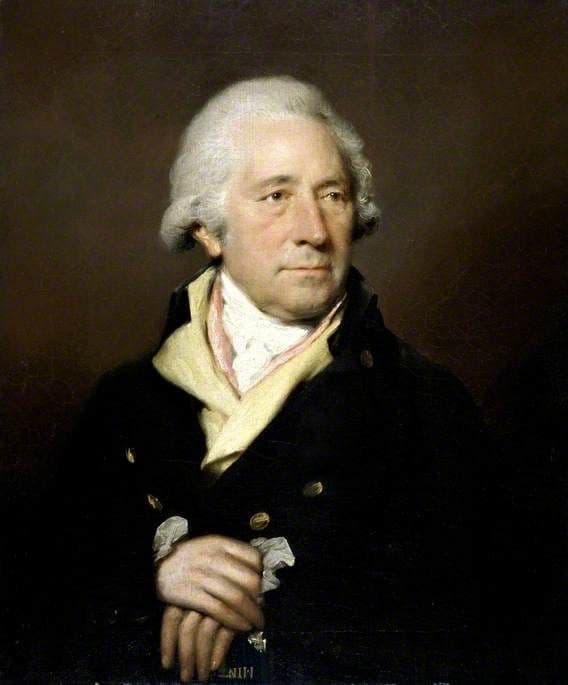
Matthew Boulton was one of its strongest backers. He served as its treasurer and, according to a 2009 book on his life, as cited on Wikipedia, promised to make up any shortfall in its funds himself.
A building of its own
The Dispensary soon outgrew its first rooms. The first stone of a new building in Union Street was laid on 23 December 1806, Showell records, and it opened to patients early in 1808, at a cost of about £3,000.
The architect was William Hollins, who had designed Boulton’s new stables at Soho House a few years before. The Victoria County History describes the result: a pedimented central block of three bays, divided by pilasters with fluted capitals “showing Egyptian influence”, and lower side wings joined to it by screen walls with doorways. Above the central entrance, in an arched recess, was a panel of symbolic sculpture, almost certainly carved by Hollins himself.
Long service
The same spot, then and now
1888–1913
Today
Old map: Ordnance Survey six-inch, reproduced with the permission of the National Library of Scotland (CC BY 4.0). Today: © OpenStreetMap contributors.
Boulton died in August 1809, the year after the building opened, and left the Dispensary a legacy. The charity went on for well over a century. Showell, writing in 1885, said thousands received medical help there every year. The Union Street building was finally demolished in 1957.
Boulton is remembered for steam and coins, but one of the last public causes he backed was this: free medicine for people who could not pay for it, from a building that stood for almost 150 years.
What happened here?
The General Dispensary gave free outpatient treatment from this building from 1808. Matthew Boulton was its treasurer, supported the new building and left the charity a legacy.
Why it mattered
The Dispensary treated thousands of poor patients each year who could not get into the hospital. Its building was one of William Hollins’s main works in the town.
Why it disappeared
Redevelopment
The building was demolished in 1957.
What’s there now
What replaced it
Later commercial buildings on the north side of Union Street.
What survives
Nothing. A National Buildings Record photograph taken before demolition is cited by the Victoria County History.
Today
Union Street, a short street between Corporation Street and High Street in the shopping centre. The Dispensary stood on its north side.
Sources and further reading
Street: Wikipedia, citing Mason (2009), says the new building of 1808 was in Temple Row. The Victoria County History says the Dispensary opened in Temple Row in 1792 and moved to the new Union Street building in 1808, and Showell agrees on Union Street, so Wikipedia has probably merged the two. Founding date: 1792 (Victoria County History) or 1794 (Showell). Boulton’s treasurership and his promise to make up any deficiency come from Mason (2009) via Wikipedia; the original letter has not been seen. The legacy is noted in Loggie’s appendix; the amount is not given.
- A History of the County of Warwick, vol. 7: The City of Birmingham — Secular Architecture, pp. 43–57 — W. B. Stephens (ed.), Victoria County History, 1964. General Dispensary, Union Street
- A History of the County of Warwick, vol. 7: The City of Birmingham — Local Government and Public Services, pp. 318–353 — W. B. Stephens (ed.), Victoria County History, 1964. Dispensary opened 1792 in Temple Row; Union Street 1808
- Showell’s Dictionary of Birmingham — Thomas T. Harman and Walter Showell, Cornish Brothers, Birmingham, 1885. ‘Dispensary’
- Soho Depicted: prints, drawings and watercolours of Matthew Boulton, his manufactory and estate, 1760–1809 (PhD thesis) — V. A. Loggie, University of Birmingham, 2011. pp. 330–331 (Hollins and the stables); appendix (legacies)
- Ordnance Survey 1:500 town plan of Birmingham, 1887–88, georeferenced — National Library of Scotland, 1888. Union Street
- Matthew Boulton — Wikipedia. lead only, citing Mason 2009 pp. 191–192
- Matthew Boulton: Selling What All the World Desires — Shena Mason (ed.), 2009. pp. 191–192, cited via Wikipedia
Comments
Comments will load here.