
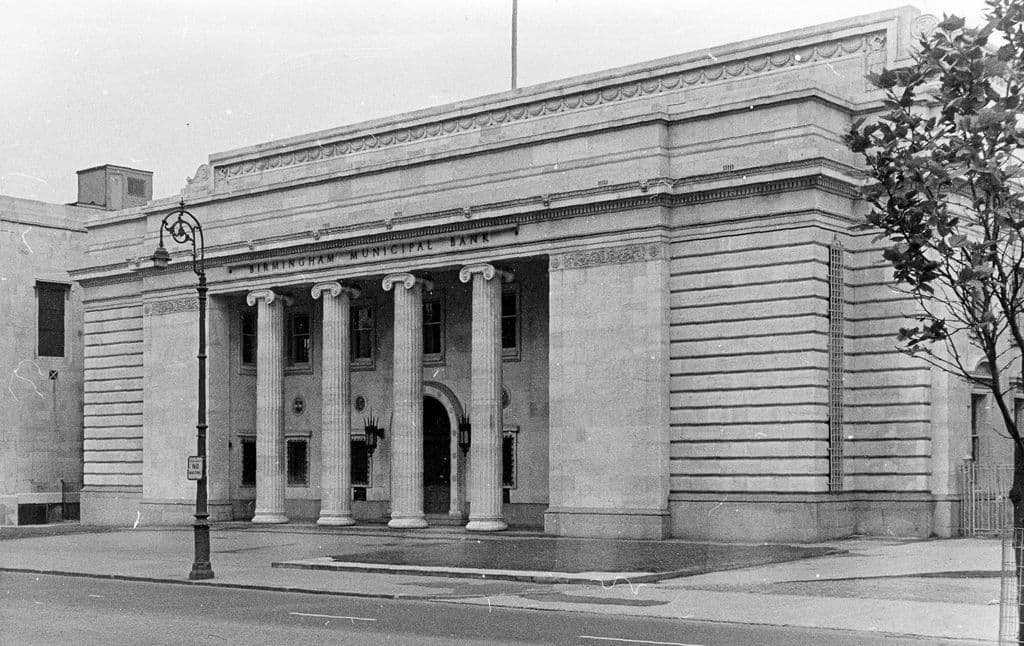
What was here?
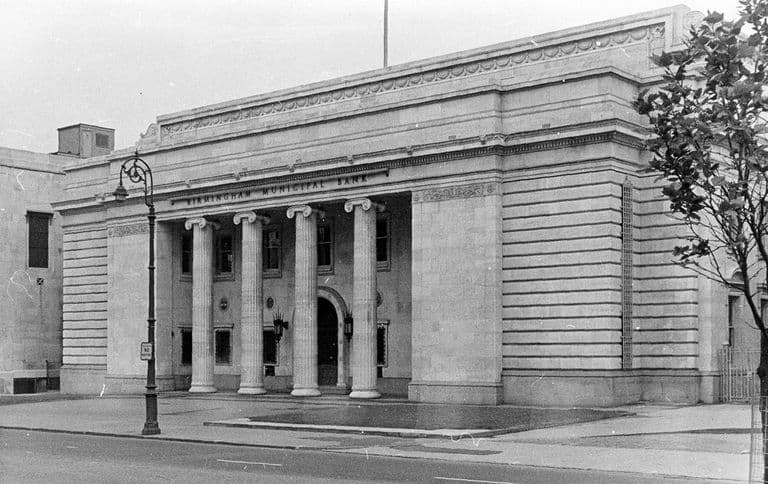
The head office of the Birmingham Municipal Bank, the only council-owned savings bank in Britain: a colonnaded classical building on Broad Street with a great banking hall and strongroom vaults.
History
The council’s bank
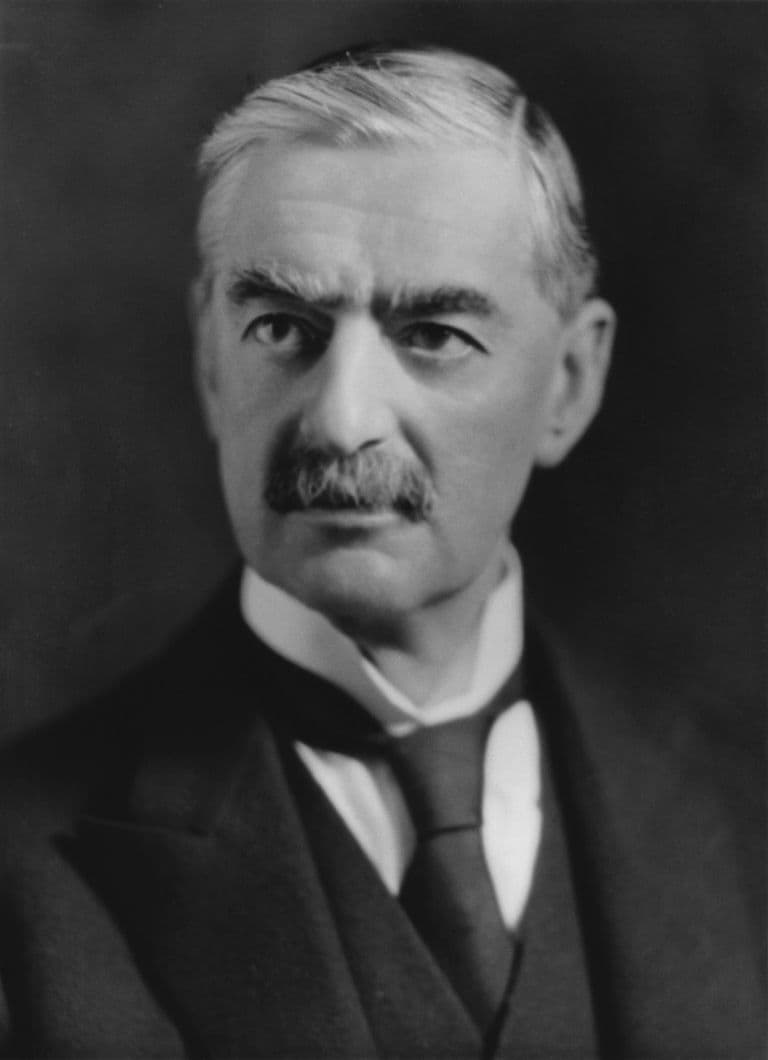
The Birmingham Municipal Bank began in 1916, when the Lord Mayor, Neville Chamberlain, persuaded the council and Parliament to let the city run its own wartime savings bank. It became permanent in 1919. The Victoria County History traces its homes: a basement at first, then rooms in the Council House in 1919, a head office in Edmund Street in 1925 and finally Broad Street in 1933.
Building it
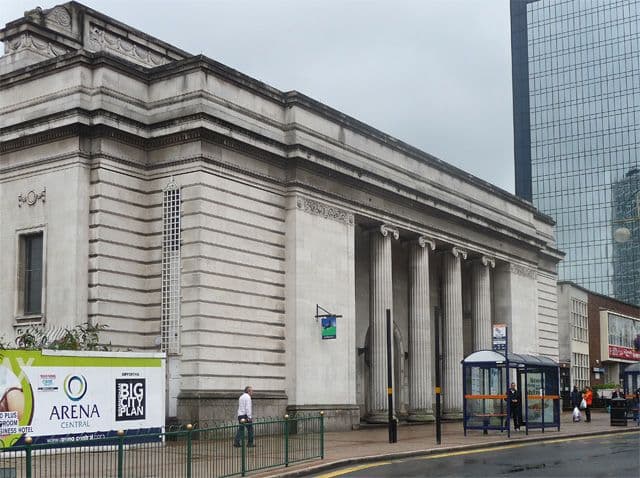
The architect was T. Cecil Howitt. Chamberlain, by then Chancellor of the Exchequer, laid the foundation stone on Saturday 22 October 1932. Prince George opened the building on 27 November 1933, with Chamberlain, the Lord Mayor and the bank’s managers present; Pathé filmed the occasion. The souvenir booklet described a Portland stone front, a loggia with bronze grilles, a marble entrance corridor and a banking hall ringed with cast-bronze screens.
Historic England describes a monumental classical building of Portland stone and granite, with a colonnade of four giant Ionic columns, bronze doors and lanterns, and a banking hall lined in polished limestone under a coffered ceiling. Across a beam inside, the bank carved its creed: “Thrift Radiates Happiness”.
After the bank
On 31 March 1976 the Municipal Bank closed its doors and reopened the next day as the Birmingham Municipal Trustee Savings Bank. The University of Birmingham says the building was later left empty for almost two decades. It was listed Grade II in 1996, sold to the city council in 2006 and used now and then for art and opera. In 2018 the University took it on, and it reopened as The Exchange, with a café, offices and exhibition space.
What happened here?
From 1933 to 1976 this was the headquarters of the city’s own savings bank, which took deposits of a penny upwards, lent money for house purchase and ran branches across Birmingham, from Kingstanding to Sutton Coldfield.
Why it mattered
The Municipal Bank was unique: no other council in Britain ran a savings bank. This building was its public face, the grandest expression of Birmingham’s belief that the city could do for its people what private business would not.
The same spot, then and now
1888–1913
Today
Old map: Ordnance Survey six-inch, reproduced with the permission of the National Library of Scotland (CC BY 4.0). Today: © OpenStreetMap contributors.
What’s there now
What survives
The whole building, including the banking hall, bronze doors and lanterns and the vaults, now restored for new uses.
Today
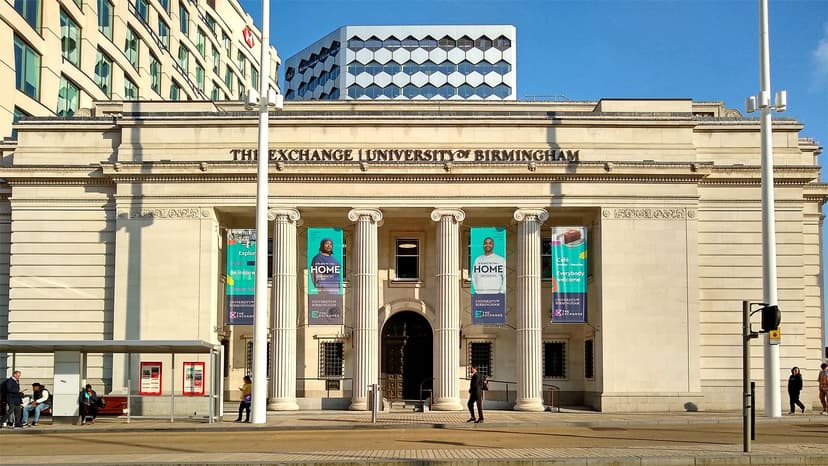
The Exchange, run by the University of Birmingham, on Broad Street facing Centenary Square, with a café on the ground floor and exhibition and meeting space.
Then and now
Then · 1966
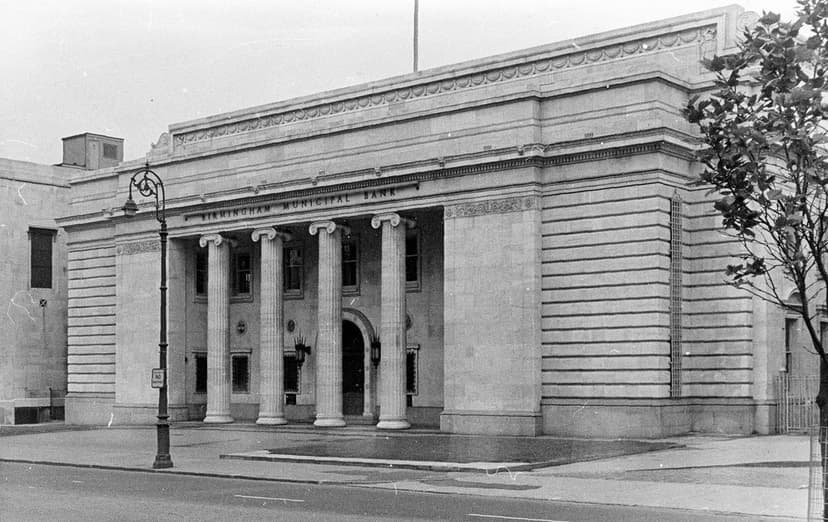
Now · 7 June 2023
Key dates
- 22 October 1932 — Bank head office foundation stoneNeville Chamberlain, now Chancellor of the Exchequer, lays the foundation stone of the Municipal Bank’s new head office on Broad Street.
- 27 November 1933 — Prince George opens the Municipal Bank head officePrince George opens T. Cecil Howitt’s Portland stone head office for the Municipal Bank on Broad Street, with Neville Chamberlain among the guests.
- 31 March 1976 — The Municipal Bank becomes a TSBThe Birmingham Municipal Bank closes its doors; the next day it reopens as the Birmingham Municipal Trustee Savings Bank.
Sources and further reading
The list entry dates the building 1931; the foundation stone was laid on 22 October 1932 and the building opened on 27 November 1933. The University says it took the building on in 2018; Wikipedia says the purchase completed in November 2017 and that The Exchange opened in 2021.
- Former Birmingham Municipal Bank (TSB), Broad Street — National Heritage List for England entry 1268165 — Historic England
- A History of the County of Warwick, vol. 7: The City of Birmingham — Local Government and Public Services, pp. 318–353 — W. B. Stephens (ed.), Victoria County History, 1964. municipal bank
- Head Office opening ceremony, 1933 — David Parkes
- Head Office, Broad Street — David Parkes
- University of Birmingham confirms city centre gateway at historic Municipal Bank — University of Birmingham, 2016
- Unlocking the Vaults — University of Birmingham
- Birmingham Municipal Bank headquarters — Wikipedia
- Birmingham Municipal Bank — Wikipedia
Comments
Comments will load here.