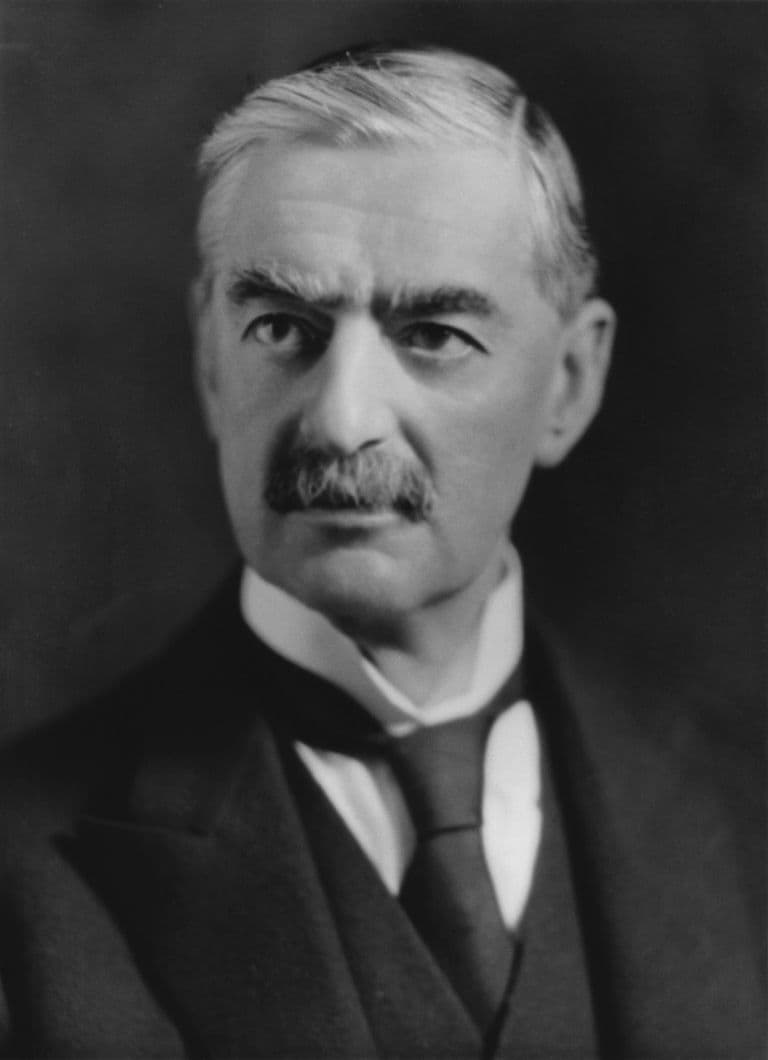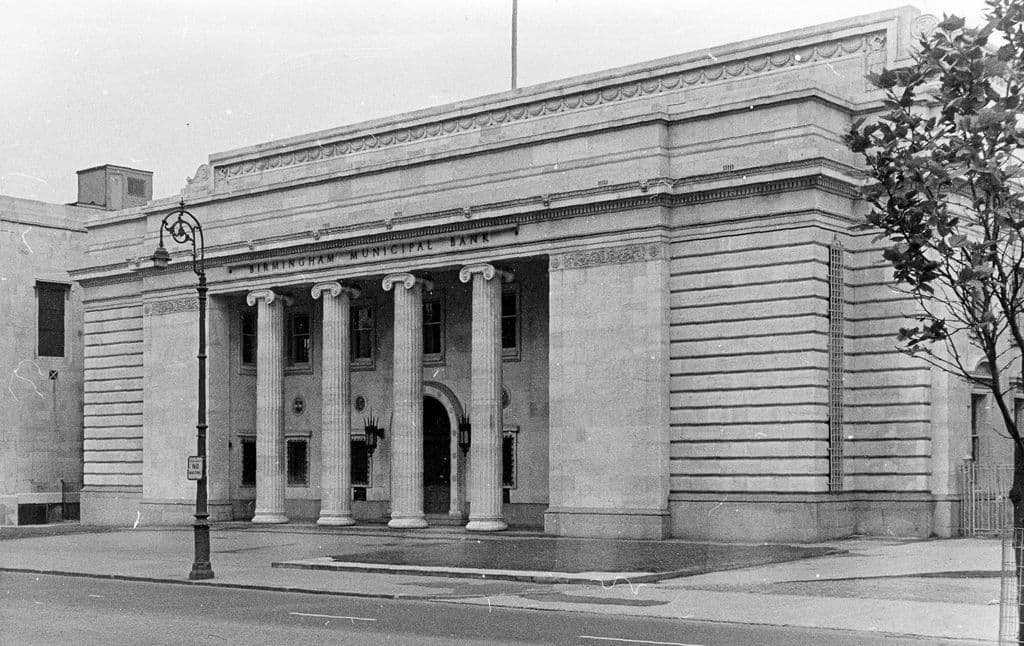
The idea was Neville Chamberlain’s. As Lord Mayor in wartime he wanted working people to save, and the government to have their savings for the war loans. The council approved his scheme on 4 April 1916. The joint-stock banks fought the first Bill, and the Act that passed on 23 August 1916 was hedged with limits, including a promise to close the bank after the war. The Victoria County History says Birmingham was the only town to use it.
From wartime to permanent
The Birmingham Corporation Savings Bank opened on 29 September 1916, in a semi-basement of the Water Department, with J. P. Hilton as manager. Workers could have small sums taken from their wages, collect shilling coupons on a card and pay them in when they reached £1. The Birmingham Corporation Act of 1919 made it permanent as the Birmingham Municipal Bank, which opened on 1 September 1919 with a head office and seventeen branches. By the end of October it held £603,319 for 24,411 depositors.
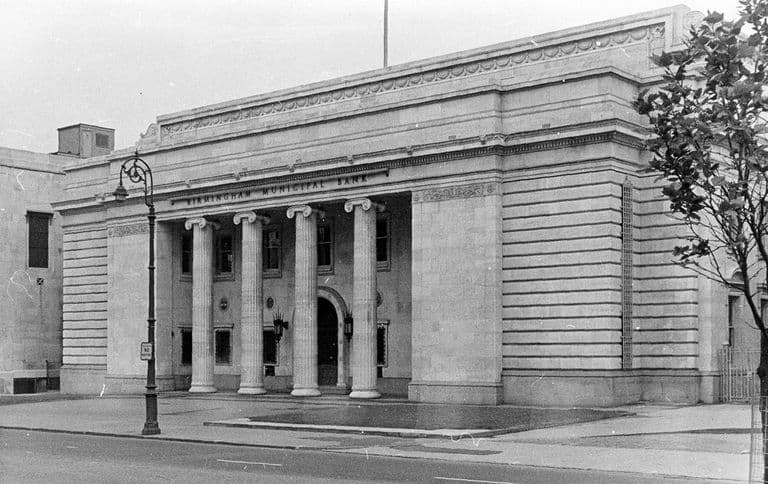
It soon became a housing bank too, lending depositors money to buy their homes, and from 1923 letting council tenants buy theirs. By 1930 there were 51 branches; by the Second World War, 63. A new head office opened on Broad Street in 1933.
Kingstanding
The bank followed the new estates. It opened an evening branch at 595 Kingstanding Road on 1 January 1932, open on Mondays and Fridays from six to eight. On 23 October 1937 the Lord Mayor, Alderman H. Roberts, opened a new building there with daily opening, “and a substantial increase in transactions ensued”, as the bank’s historian, David Parkes, puts it.
The end
On 31 March 1976 the Birmingham Municipal Bank closed its doors, and the next day it reopened as the Birmingham Municipal Trustee Savings Bank. In 1979 it merged into the TSB of Birmingham and the Midlands.
On the map
2 places connected with Birmingham Municipal Bank. Tap a number for directions — some sites are private homes or gardens, so each place’s page says what you can see from the street.

Key dates
- 29 September 1916 — The city’s own savings bank opensThe Birmingham Corporation Savings Bank, promoted by the Lord Mayor, Neville Chamberlain, opens in a semi-basement of the Water Department. No other council in Britain has one.
- 1 September 1919 — The Birmingham Municipal Bank opensMade permanent by the Birmingham Corporation Act 1919, the Municipal Bank opens with a head office and seventeen branches.
- 22 October 1932 — Bank head office foundation stoneNeville Chamberlain, now Chancellor of the Exchequer, lays the foundation stone of the Municipal Bank’s new head office on Broad Street.
- 1 January 1932 — The Municipal Bank comes to KingstandingThe Municipal Bank opens an evening branch at 595 Kingstanding Road, open on Mondays and Fridays from six to eight. A new branch building follows in 1937.
- 27 November 1933 — Prince George opens the Municipal Bank head officePrince George opens T. Cecil Howitt’s Portland stone head office for the Municipal Bank on Broad Street, with Neville Chamberlain among the guests.
- 23 October 1937 — Kingstanding’s new bank branchThe Lord Mayor, Alderman H. Roberts, opens the Municipal Bank’s new branch building at 595 Kingstanding Road, replacing the evening branch with daily opening.
- 31 March 1976 — The Municipal Bank becomes a TSBThe Birmingham Municipal Bank closes its doors; the next day it reopens as the Birmingham Municipal Trustee Savings Bank.
Sources and further reading
- A History of the County of Warwick, vol. 7: The City of Birmingham — Local Government and Public Services, pp. 318–353 — W. B. Stephens (ed.), Victoria County History, 1964. municipal bank
- Birmingham Municipal Bank history: BMB History — David Parkes
- Birmingham Municipal Bank — Wikipedia
- Kingstanding Circle shops (Municipal Bank section) — Voices of Kingstanding
- Papers of Neville Chamberlain (NC) — catalogue — Cadbury Research Library, University of Birmingham, 2016
- Birmingham’s Interwar Council House Building — John Boughton, Municipal Dreams, 2014