
What was here?
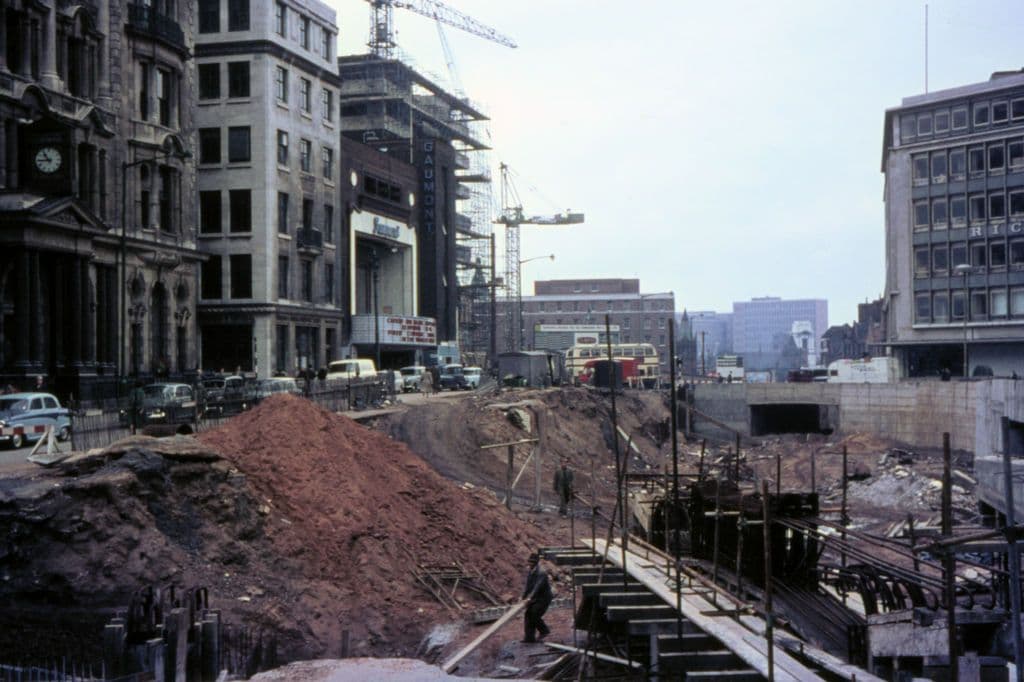
Before the Wesleyan headquarters at Colmore Circus, this corner of Steelhouse Lane held the Gaumont: a super-cinema for about 2,000 people, with a theatre organ and, later, a giant curved Cinerama screen.
History
On Monday 9 February 1931 the doors opened on a new Birmingham picture palace. The Gaumont Palace, at the top of Steelhouse Lane, began with a double bill: Raffles, starring Ronald Colman, and A Royal Romance.
A new kind of cinema
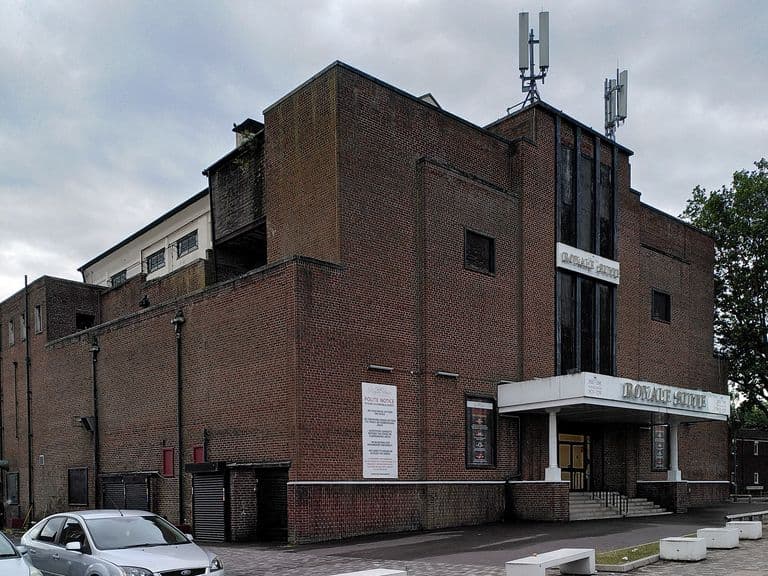
It opened just six months after Oscar Deutsch’s first Odeon on Birchfield Road in Perry Barr.
The building was designed by William T. Benslyn. Cinema Treasures records that it was the first cinema Gaumont British built from scratch, rather than taking over an existing hall.
It was big. About 2,034 people could sit inside, several hundred more than at the Perry Barr Odeon. There was a Compton organ with three manuals and ten ranks of pipes, opened by the organist Leslie James. In 1937 the name was shortened to the Gaumont.
Cinerama
The Gaumont’s most famous years came in the 1960s. It was refitted for Cinerama, the wide-screen process that wrapped the picture around the audience. The Birmingham Weekly Mercury reported in 1963 that the screen measured “95 ft. around the semicircle and 32 ft. high”, reported to be the largest in the country.
That screen made the Gaumont a destination. From May 1965 it showed The Sound of Music in 70 mm, and the film ran for more than three years.
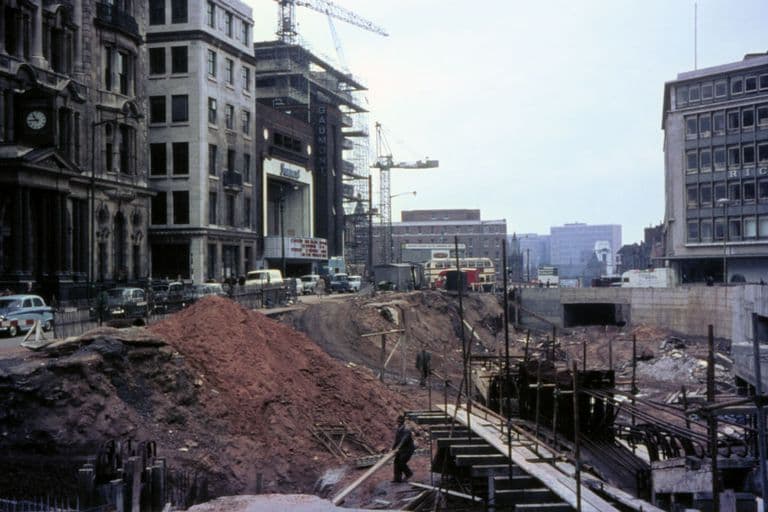
A photograph taken in 1963 by John Ball shows the upper end of Steelhouse Lane with the Gaumont still open, while the new Colmore Circus ring road was being built around it. The city was changing around the cinema, but the cinema carried on.
The last show
It could not carry on for ever. The Gaumont closed on Saturday 29 October 1983, after more than half a century of shows on the same corner. The last film was Yellowbeard. It was demolished in 1986, as the city centre’s big cinemas closed.
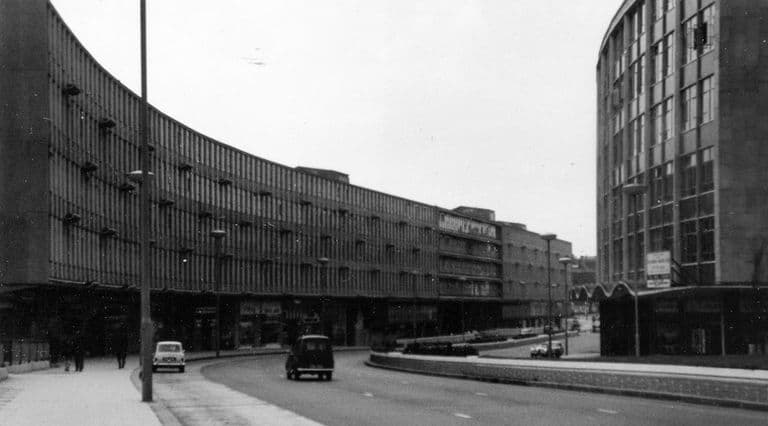
In its place came the headquarters of the Wesleyan Assurance Society at Colmore Circus, built in 1988–91. Nothing of the cinema is known to survive.
Remembering it
The Gaumont lives on in photographs, including the Historic England Archive’s Norman Walley Cinema Collection, and in the memories gathered by local historians.
Its story follows the whole arc of the super-cinema: built in the early 1930s, reinvented in the 1960s with a screen nobody could fit at home, and gone by the 1980s. For more than three years in the 1960s, the hills were alive at the top of Steelhouse Lane.
Why it mattered
The Gaumont was the first cinema built new by Gaumont British and one of Birmingham’s principal city-centre super-cinemas. Its Cinerama screen, reported in 1963 as the largest in the country, and its three-year run of The Sound of Music made it a regional landmark. Its closure and demolition in the 1980s belong to the wider loss of the city’s big picture palaces.
Why it disappeared
Commercial redevelopment · Redevelopment
The cinema closed on 29 October 1983 and was demolished in 1986, during the wider closure of city-centre super-cinemas (Cinema Treasures; Wonderland Birmingham). The site was redeveloped for the Wesleyan Assurance Society’s headquarters.
What’s there now
What replaced it
The Wesleyan Assurance Society headquarters at Colmore Circus, built 1988–91.
What survives
Nothing of the building is known to survive. Photographs survive, including the Historic England Archive’s Norman Walley Cinema Collection (NWC01/01/0303, Steelhouse Lane façade) and John Ball’s 1963 view of upper Steelhouse Lane.
Today
The Wesleyan headquarters stands at Colmore Circus, at the top of Steelhouse Lane.
Key dates
- 9 February 1931 — Gaumont Palace opensWilliam T. Benslyn’s Gaumont Palace opens on Steelhouse Lane with Raffles and A Royal Romance: the first cinema built new by Gaumont British.
- 1986 — Gaumont demolishedThe Gaumont, closed on 29 October 1983 after a final showing of Yellowbeard, is demolished. The Wesleyan headquarters is later built on the site.
Sources and further reading
The cinema’s exact position needs plotting from a 1950s OS map. The point used is at the Steelhouse Lane / Colmore Circus corner; another candidate point, for the Wesleyan headquarters, lies about 200 m away.
The dates of the Wesleyan headquarters (1988–91) come from a secondary source.
- Gaumont Birmingham — Ken Roe (Cinema Treasures)
- Gaumont, Birmingham — Aveleyman cinema database
- The Gaumont — Wonderland Birmingham
- Gaumont cinema, Steelhouse Lane façade (Norman Walley Cinema Collection, NWC01/01/0303) — Historic England Archive. Ref. NWC01/01/0303
Archive references: Historic England Archive (Norman Walley Cinema Collection) NWC01/01/0303
Comments
Comments will load here.