
What was here?
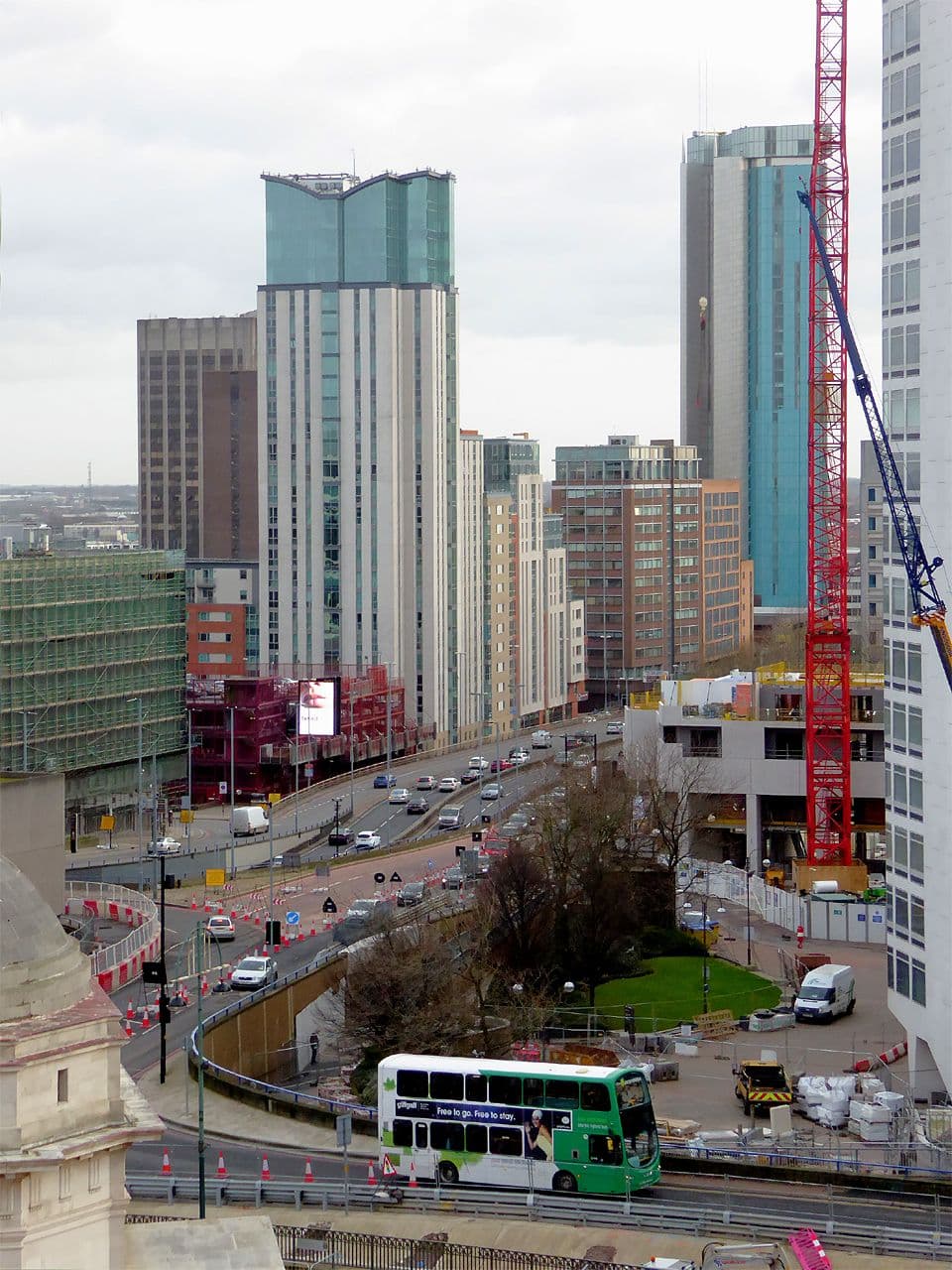
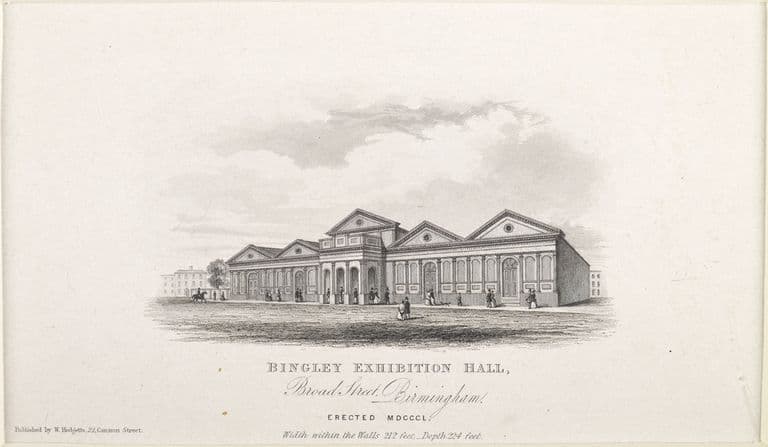
A large exhibition hall on the south-west side of Suffolk Street, beside the Old Wharf canal basins, built for the dog show and used for circuses, panoramas and other shows. It became one of Birmingham’s first homes of film and, as the West End, a city-centre cinema with a dance hall, a restaurant and a Wurlitzer organ.
History
A hall for dogs
Birmingham’s cattle show filled Bingley Hall. From 1865 the dog show held at the same time had a hall of its own. A building designed in 1864 for dog shows went up on Suffolk Street, beside the canal wharves. On 1 August 1865 Viscount Curzon MP laid the foundation stone, and on 4 December 1865 the hall opened with the sixth annual exhibition of dogs. It was named Curzon Hall, probably after him.
The show became the National Exhibition of Sporting and other Dogs, with about 1,000 entries a year. By 1885 the hall belonged to a company and had cost about £7,500. Showell said it was “often used for exhibitions, panoramas, circus entertainments, &c.”. On 20 November 1878 Webb’s of Wordsley filled it with prize roots.
Birmingham’s first films
Curzon Hall’s great claim came around the turn of the century. “The first cinema shows in Birmingham had been presented in the Curzon Hall, Suffolk Street,” says the Victoria County History. Its proprietor, Walter Jeffs, had at first included films as a small part of a show: “in time, they became the main attraction.” Jeffs filmed local subjects too, among them “Shakespeareland” in 1908 and the royal visit of 1909. For a time the hall was known as the New Century Picture Theatre.
The same spot, then and now
1888–1913
Today
Old map: Ordnance Survey six-inch, reproduced with the permission of the National Library of Scotland (CC BY 4.0). Today: © OpenStreetMap contributors.
During the First World War it closed and was used as a recruiting office. In 1915, says the Victoria County History, it became known as the West End Cinema.
The West End
In 1925 the old hall was extensively altered by Frederick J. Pepper and reopened on 9 March as the West End Cinema and Dance Hall. Provincial Cinematograph Theatres took it over in 1926 and installed a Wurlitzer organ; Reginald Dixon was among its resident organists. Gaumont British took over in 1929. With 1,385 seats, a dance hall and a restaurant, it was one of the big city-centre picture houses for forty years, and in the mid-1960s it showed 70mm roadshow films.
Rank closed it briefly in March 1965 and took out the organ, then reopened it a few weeks later. The final closure came on 18 March 1967, with Return of the Seven and Ambush Bay.
Under the Queensway
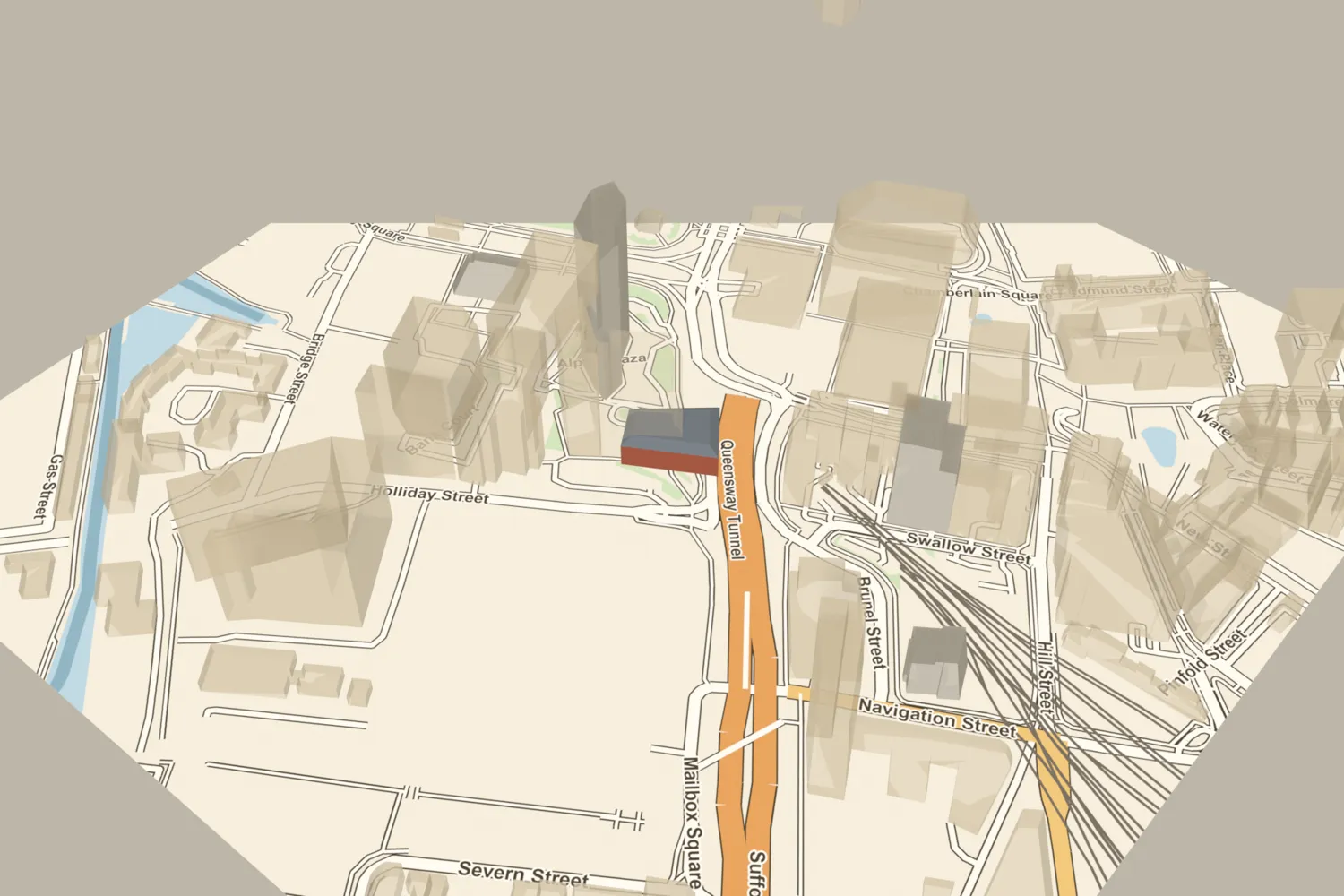
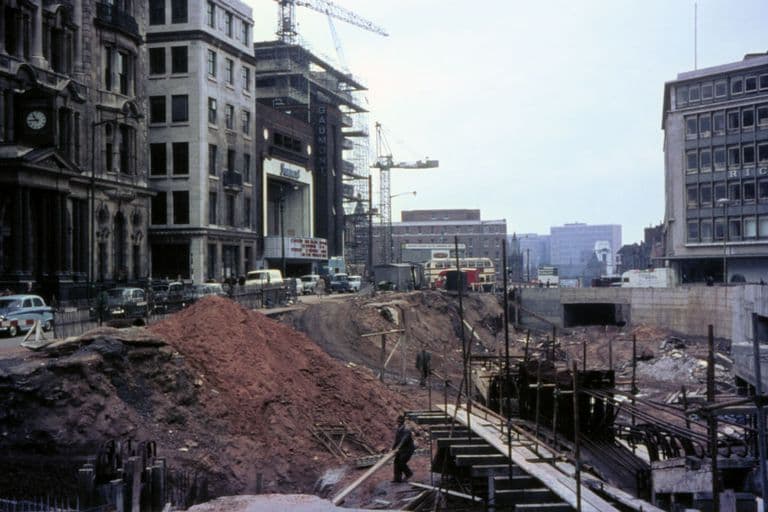
The building was demolished soon afterwards. The hall’s outline now lies across the carriageway and verge of Suffolk Street Queensway and under part of the Aston Place apartment tower, with the Crowne Plaza hotel and Alpha Tower close by. Nothing survives of the hall where Birmingham first watched moving pictures.
Why it mattered
Curzon Hall was home to the national dog show that ran alongside the Bingley Hall cattle show. More than that, the Victoria County History says the first cinema shows in Birmingham were given here, by Walter Jeffs, whose films grew from a sideshow into the main attraction. As the West End it was a large city-centre cinema and dance hall for forty years.
Why it disappeared
Commercial redevelopment · Redevelopment
It closed on 18 March 1967 and was demolished soon after, as the area round Suffolk Street was redeveloped. The exact demolition date has not been found.
The West End Cinema, on today’s streets
What’s there now
What replaced it
Cleared for redevelopment after 1967. Today the site is the Suffolk Street Queensway carriageway and verge and the Aston Place apartment tower (built about 2018–20).
What survives
Nothing, and there is no plaque. The Wurlitzer organ was removed in 1965; where it went has not been traced.
Today
Stand on the south-west side of Suffolk Street Queensway, by the Aston Place tower near Holliday Street. The hall stood across today’s carriageway and verge, beside the old canal wharves; Alpha Tower and the Crowne Plaza are close by.
Today
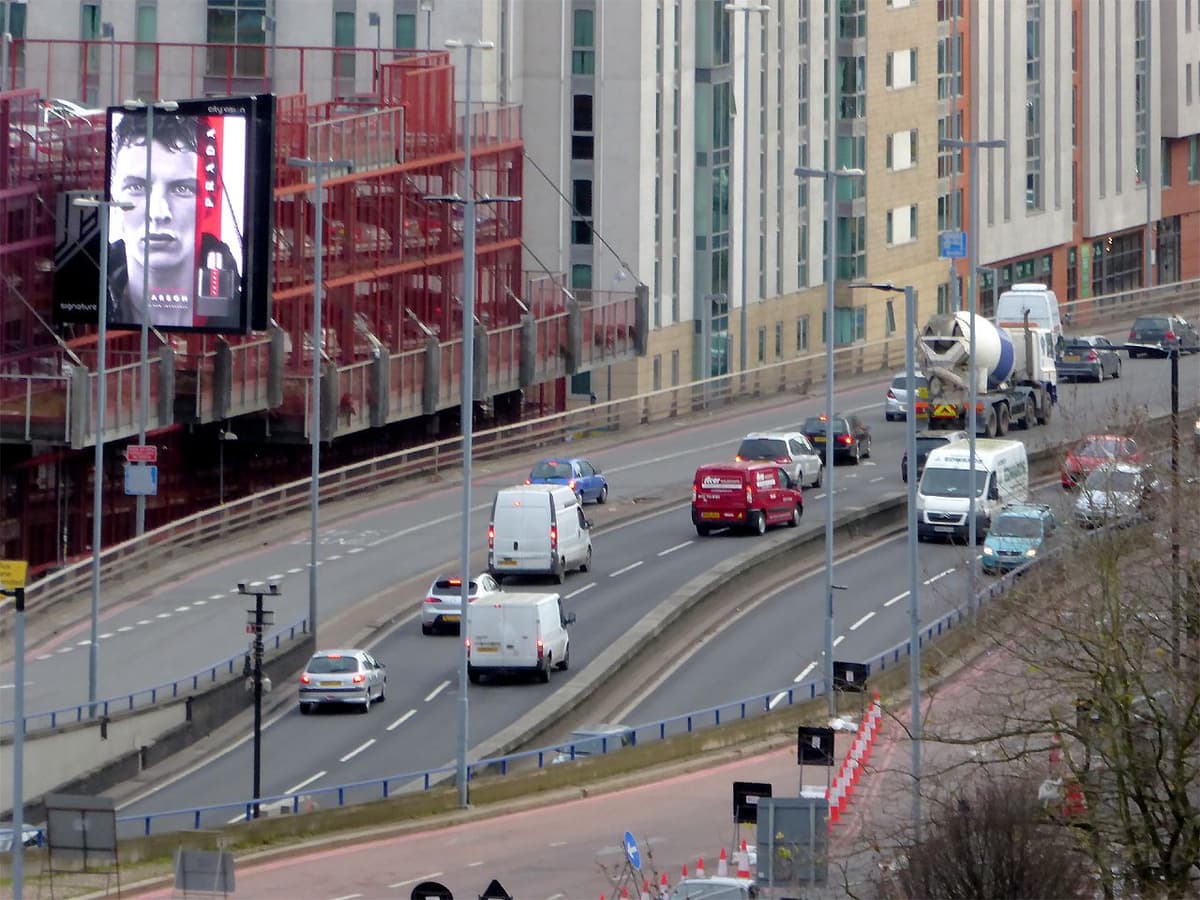
Suffolk Street Queensway, 7 December 2017Roger Kidd, 7 December 2017. Geograph Britain and Ireland via Wikimedia Commons · CC BY-SA 2.0
Sources and further reading
Cinema Treasures gives 1864 for the opening; Langford and Showell show the stone laid on 1 August and the opening on 4 December 1865, and the Victoria County History says the hall was designed in 1864. The West End name dates from 1915 in the VCH and 1925 in Cinema Treasures. How much of the 1865 hall survived Pepper’s 1925 alterations is not known. The exact demolition date was not found; Cinema Treasures links the site to the ATV building of 1969 and says the Crowne Plaza now stands on it, but mapping puts the hotel about 30 metres to the south-west, with Aston Place and the Queensway over the hall’s outline. The architect of 1864–65, the hall’s height, roof and materials are not recorded. That the hall was named after Viscount Curzon, who laid its stone, is an inference; it cannot have been named after the later Viceroy, who was a child in 1865.
- A History of the County of Warwick, vol. 7: The City of Birmingham — Social History since 1815, pp. 223–245 — W. B. Stephens (ed.), Victoria County History, 1964. designed 1864 for dog shows; first cinema shows; Walter Jeffs; West End from 1915
- Modern Birmingham and its Institutions, vols 1–2 — John Alfred Langford, 1873–77. vol. 2, p. 278: foundation stone and opening, 1865
- Showell’s Dictionary of Birmingham — Thomas T. Harman and Walter Showell, Cornish Brothers, Birmingham, 1885. ‘Curzon Hall’, ‘Dog Shows’: cost, uses, entries
- West End Cinema, Birmingham — Ken Roe (Cinema Treasures)
- Curzon Hall, Suffolk Street (forum thread) — Birmingham History Forum
- Ordnance Survey 1:500 town plan of Birmingham, 1887–88, georeferenced — National Library of Scotland, 1888. Curzon Hall traced
- Ordnance Survey 25-inch map, Warwickshire (Birmingham sheet), georeferenced — National Library of Scotland
- OpenStreetMap data (Overpass and Nominatim), central Birmingham — OpenStreetMap contributors, 2026
Comments
Comments will load here.