
What was here?
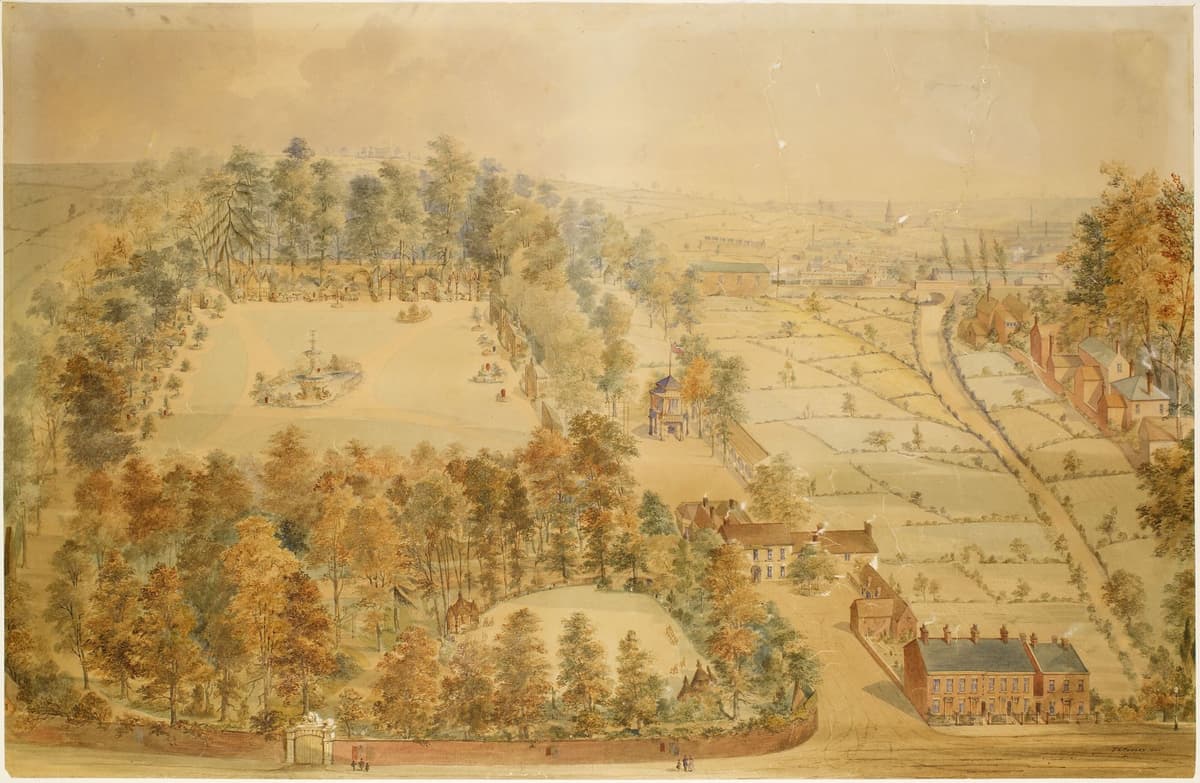
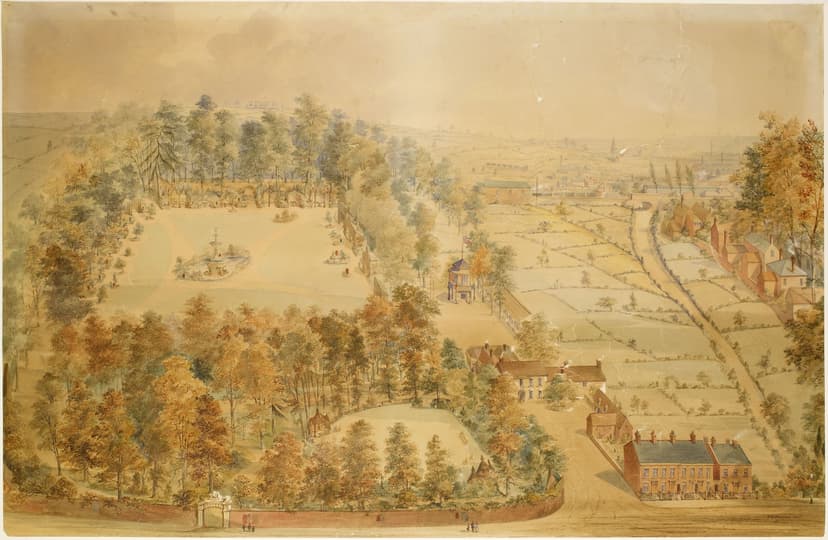
The medieval manor house of Duddeston, seat of the Holte family until they moved to Aston Hall, and the pleasure gardens that grew up in its grounds. Known as Vauxhall, the gardens offered concerts, a bowling green, shady walks, statues, fireworks and balloon ascents for about a hundred years.
History
The Holtes’ old house
Duddeston was one of the manors of the Holte family, who held Aston, Duddeston, Nechells and Bordesley. By 1400 Walter Holte held land in Duddeston and Bordesley with Aston. The manor house at Duddeston was the family’s seat until 1631, when they moved to Aston Hall, the great house Sir Thomas Holte had built. About 1725 a “Lady Holte”, presumably a widow of the family, was still living there.
Birmingham’s Vauxhall
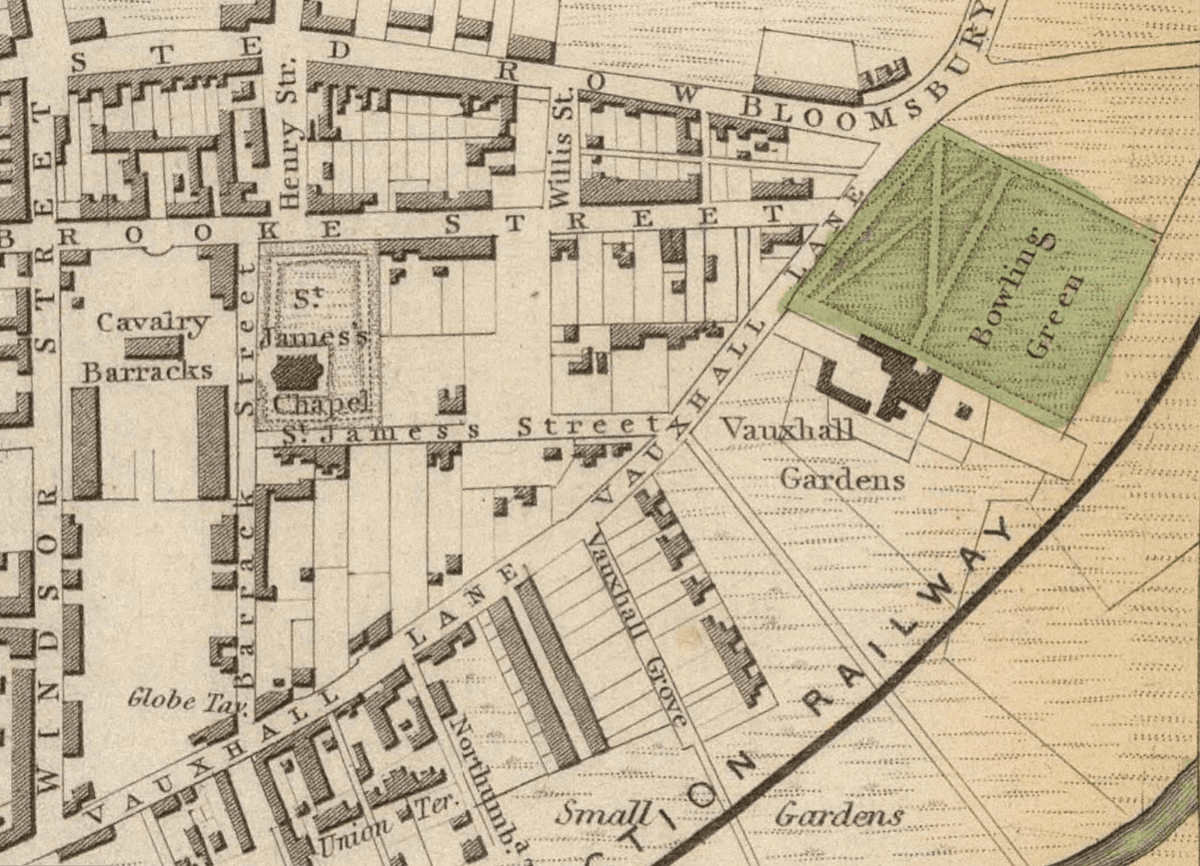
From the 1740s the old house and its grounds found a new life. A cock-fight was advertised “at Duddeston Hall” in 1746, and the name Vauxhall came into use. Mrs Delany visited in 1749 and found the gardens “very neat and pretty, with a handsome bowling green”. In 1751 the place was offered to let as “Duddeston Hall commonly called Vaux Hall … a large and commodious house, with necessary out buildings, and a large bowling green”, with a concert every other week and a closed cock-pit. On 4 June 1758 it opened as a public house.
The Victoria County History describes fortnightly summer concerts for the “genteeler sort of people”, a bowling green and a billiard table, and balls held with the Hospital concerts. There were an orchestra, an organ, statues and shady walks. By 1781 the old manor house had been largely demolished.
Fireworks and balloons
Charles Pye described the gardens in 1818: “a very spacious bowling green, an orchestra, a great number of commodious gravel walks, on the borders of which are numerous lofty trees”. He also noted that the place had become an alehouse “where persons of all descriptions may be accommodated”, and that the lead statues had been removed after thefts. The gardens kept up with the times, with fireworks, athletic races, floral fêtes and balloon ascents. Sadler went up from here in 1811.
Then came the railway. The Grand Junction Railway reached Vauxhall in 1837, and the gardens’ popularity waned. That year Drake called the house and grounds “once a favourite resort but now deserted as unfashionable”. Yet they rallied, with galas and singers from London, and from 1846 they were styled the Royal Vauxhall Gardens.
The last dance
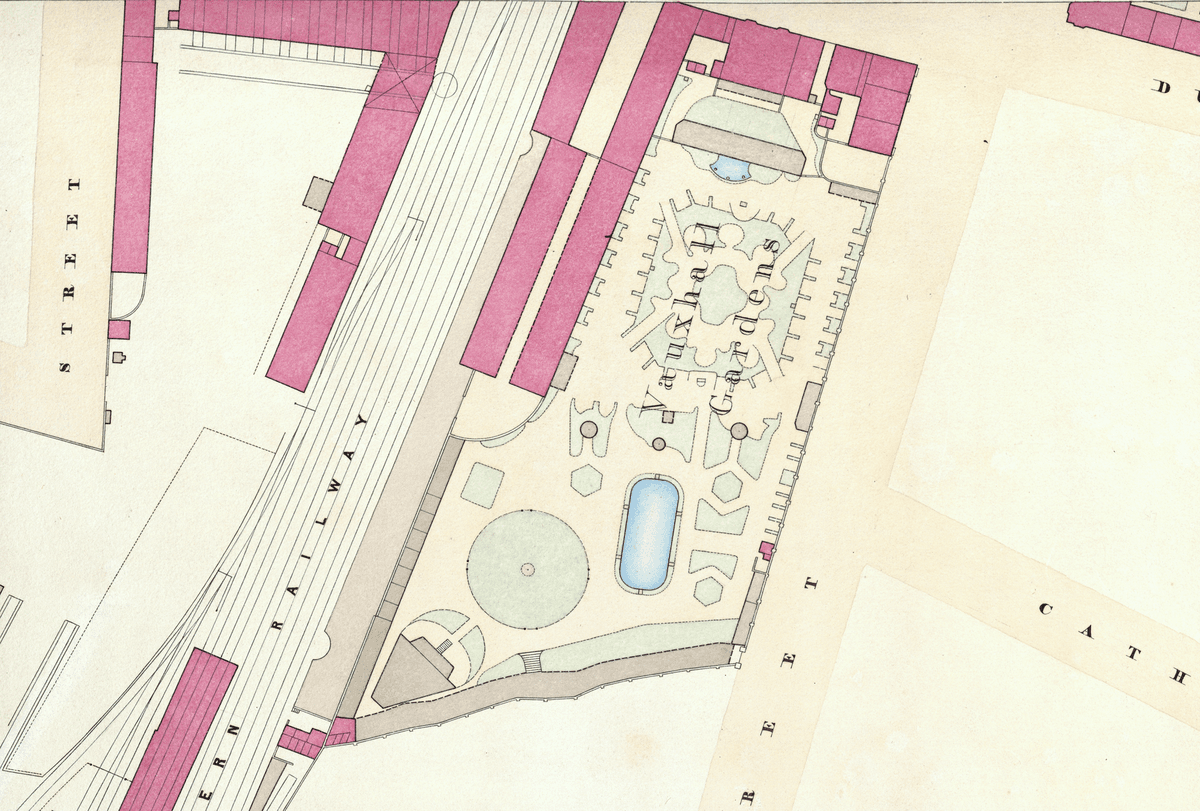
In 1850 the estate was sold to the Victoria Land Society for building. On 16 September there was a farewell dinner and ball. At six the next morning the first tree was felled, and the last of the old house was demolished that year. By 1855 new streets had been laid out over the grounds: Newdegate, Spooner, Scott and Pitney Streets. A smaller Royal Vauxhall Gardens carried on for a few years east of the railway, where in July 1853 Green made a balloon ascent and a floral fête was held.
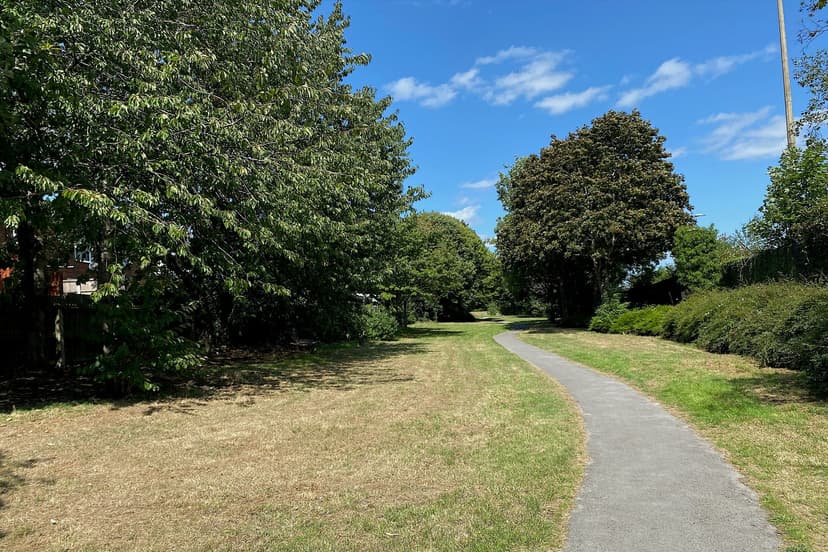
By 1841 Duddeston and Nechells had more than 20,000 people, and the houses won. The site of the old hall is now covered by homes on Hindlow Close, between Vauxhall Road and Erskine Street, with a small park behind. Nothing survives above ground. But the name does: Vauxhall Road, Vauxhall Grove and the district of Vauxhall all remember the gardens where Birmingham once came to dance.
Why it mattered
Duddeston Hall was the seat of the Holtes, the family of Aston Hall, until 1631. As Vauxhall it became Birmingham’s main eighteenth-century pleasure garden, where polite society came for concerts and balls, and later crowds came for fireworks and balloon ascents. Its closure in 1850 marked the spread of railways and housing across Duddeston.
Why it disappeared
Estate sold and built over · Railway changes
The house was largely demolished by 1781. After the railway arrived alongside in 1837 the gardens went out of fashion, and in 1850 the estate was sold to the Victoria Land Society. The trees were felled, the last of the house was pulled down and the ground was laid out in streets.
More pictures
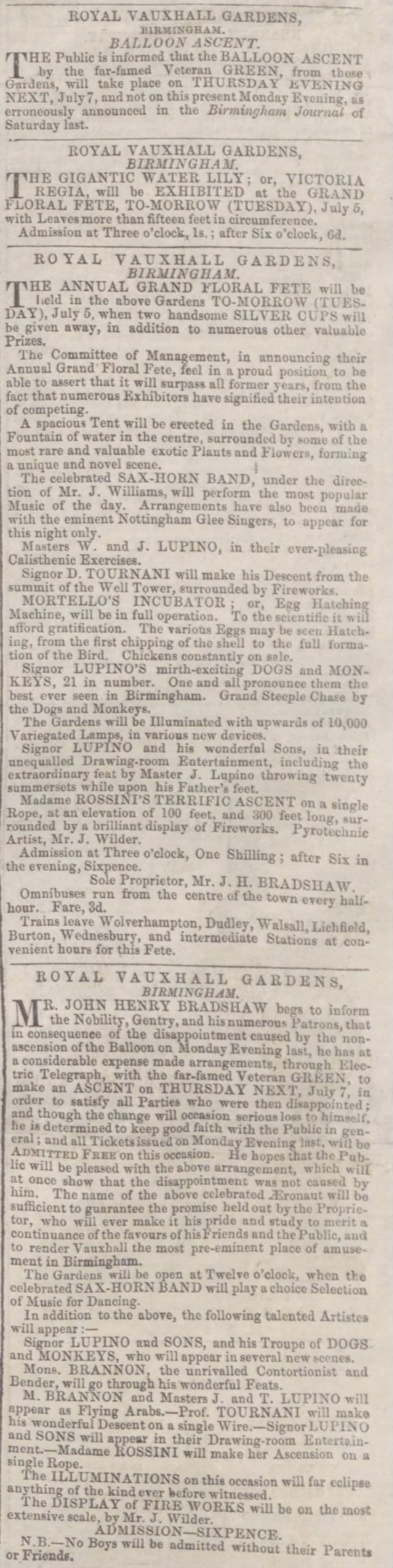
Royal Vauxhall Gardens advertisements, 18534 July 1853. Aris’s Birmingham Gazette via Wikimedia Commons · Public domain
What’s there now
What replaced it
Victoria Land Society streets (Newdegate, Spooner, Scott and Pitney Streets) by 1855, later terraces, courts and the Aston Union Offices. The site of the house is now housing on Hindlow Close, off Vauxhall Road.
What survives
Nothing. By 1783 Hutton found only “demolished fish-ponds, and the old foundations, which repel the spade”. The name lives on in Vauxhall Road, Vauxhall Grove and the Vauxhall district.
Today
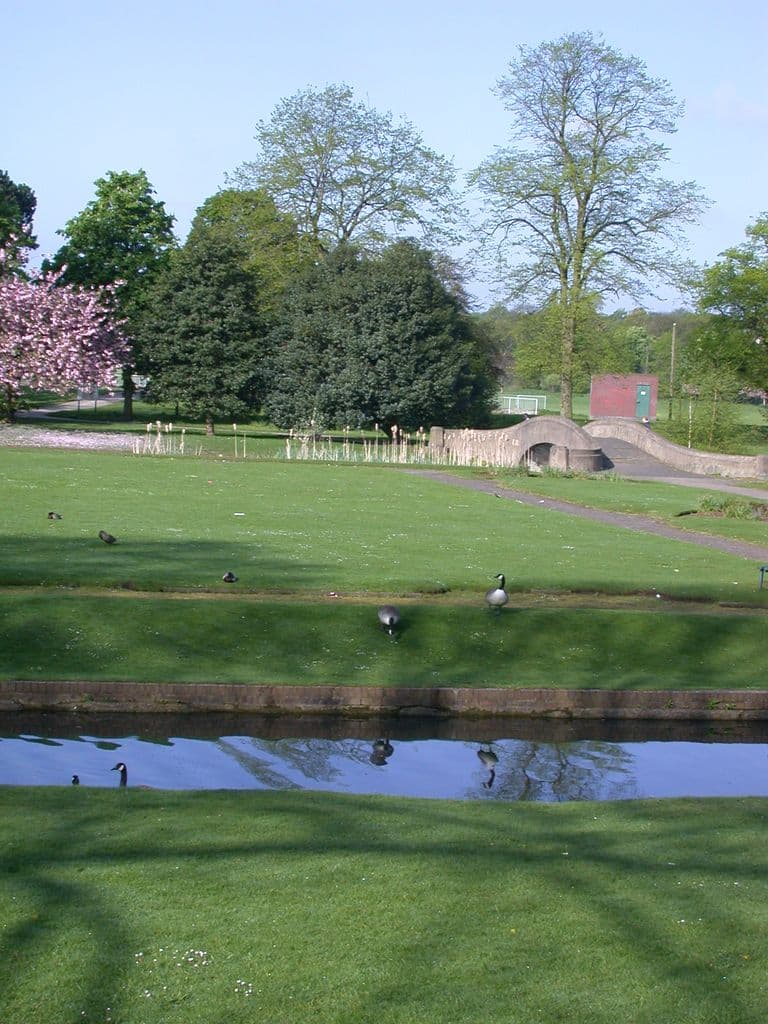
Walk along Vauxhall Road to Hindlow Close, between Vauxhall Road and Erskine Street. The house stood about here, a little south-west of Duddeston station; the small park behind the houses is the nearest open ground.
Then and now
Then · 1850
Now · 8 August 2025
Today
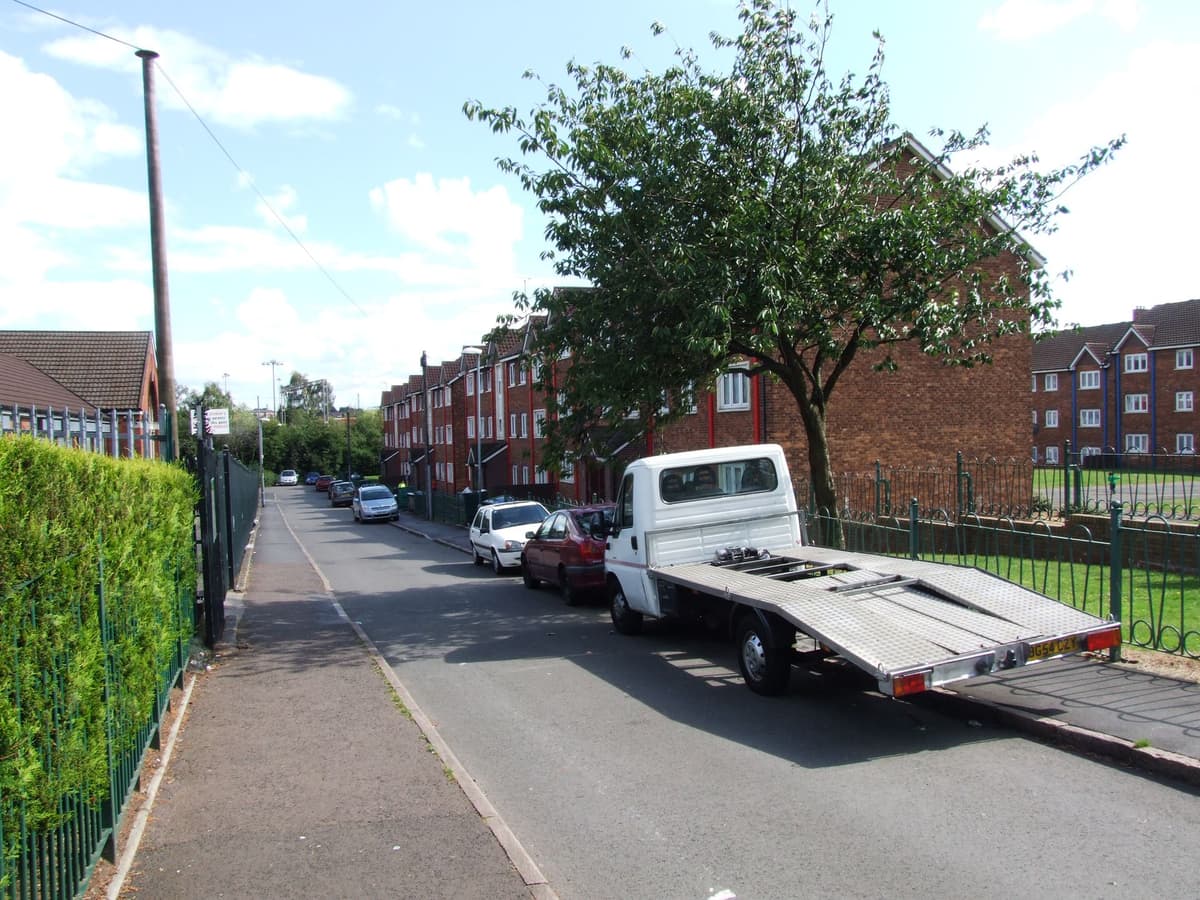
Vauxhall Grove, Nechells, 3 August 2014Chris Whippet, 3 August 2014. Geograph Britain and Ireland via Wikimedia Commons · CC BY-SA 2.0
Sources and further reading
The position of the house comes from one small-scale engraved map of 1839, fitted to the 1855 survey and extrapolated, so it is good only to about 50 metres; William Dargue’s grid reference is about 350 metres further east. How much of the medieval house survived after 1781 is not known: the Victoria County History says “largely demolished”, while Pye (1818) and Drake (1837) still speak of the house. The gardens were in use from the 1740s (Mitchell; advertisements of 1746 and 1751), but Showell gives 4 June 1758 for the opening as a public house and Dargue says c.1740. The Victoria County History dates the Holtes’ move to Aston to 1631; Hutton says the reign of James I. The second, smaller Royal Vauxhall Gardens east of the railway (1853–55) was a separate site; when it closed is not known. This is not the Galtons’ Duddeston House, which was also sometimes called Duddeston Hall.
- A History of the County of Warwick, vol. 7: The City of Birmingham — Manors, pp. 58–72 — W. B. Stephens (ed.), Victoria County History, 1964. Duddeston: Holte tenure, move to Aston 1631, Lady Holte c.1725, largely demolished by 1781, finally demolished 1850
- A History of the County of Warwick, vol. 7: The City of Birmingham — Economic and Social History: Social History before 1815, pp. 209–222 — W. B. Stephens (ed.), Victoria County History, 1964. concerts, bowling green, balls
- A History of the County of Warwick, vol. 7: The City of Birmingham — The Growth of the City, pp. 4–25 — W. B. Stephens (ed.), Victoria County History, 1964. railway 1837; population of Duddeston and Nechells
- An History of Birmingham (2nd edition) — William Hutton, Pearson and Rollason, Birmingham (Project Gutenberg text), 1783. fish-ponds and old foundations
- A Description of Modern Birmingham — Charles Pye, 1818–19. description of 1818; statues removed
- Showell’s Dictionary of Birmingham — Thomas T. Harman and Walter Showell, Cornish Brothers, Birmingham, 1885. opened as a public house 4 June 1758; farewell 16 September 1850
- Modern Birmingham and its Institutions, vols 1–2 — John Alfred Langford, 1873–77. vol. 1: closure 1850
- A Century of Birmingham Life — John Alfred Langford, 1870. vol. 2: galas
- Duddeston’s ‘Shady Walks and Arbours’ — Elaine Mitchell, West Midlands History, 2015
- Vauxhall Gardens, Birmingham — Val Preece, Vauxhall History, 2012. advertisements of 1746 and 1751; Drake 1837
- Royal Vauxhall Gardens advertisements, Aris’s Birmingham Gazette, 4 July 1853, p. 3 — Aris’s Birmingham Gazette, 1853
- Vauxhall, Vauxhall Gardens — A History of Birmingham Places & Placenames from A to Y — William Dargue
- Vauxhall Gardens (Birmingham) — Wikipedia
- Birmingham (Society for the Diffusion of Useful Knowledge map) — J. Henshall (engraver), 1839. used to place the house
- Plan of the Borough of Birmingham (Pigott Smith), 1855 — J. Pigott Smith, National Library of Scotland (online), 1855
- Ordnance Survey 25-inch map, Warwickshire (Birmingham sheet), georeferenced — National Library of Scotland
- OpenStreetMap data (Overpass and Nominatim), central Birmingham — OpenStreetMap contributors, 2026
Archive references: Birmingham Museums Trust 1979V527
Comments
Comments will load here.