
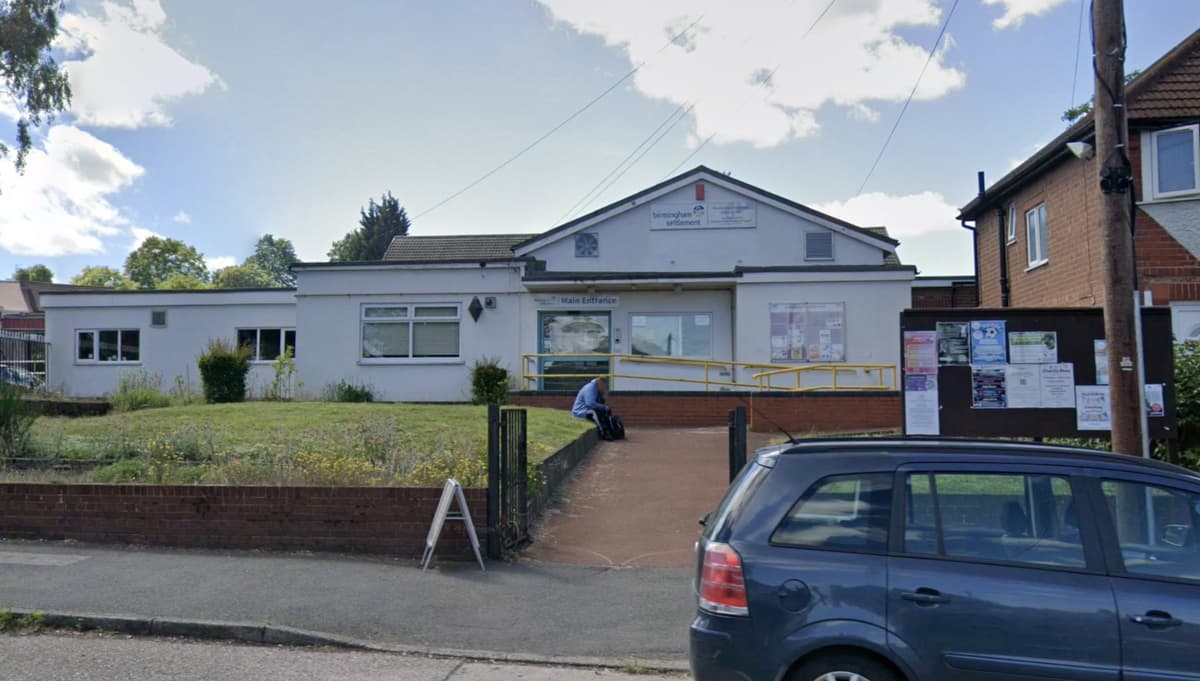
At 600 Kingstanding Road stands the Birmingham Settlement Sports & Community Centre, long known locally as the 610 Community Centre. The charity behind it, Birmingham Settlement, is one of the oldest in Birmingham, and its story in Kingstanding goes back to the early 1930s.
Founded in Summer Lane, 1899
The settlement movement began in London in 1884 with Toynbee Hall, where educated volunteers went to live — to “settle” — in poor districts and work alongside their neighbours. Birmingham’s settlement followed fifteen years later — and unlike many before it, it was a women’s settlement.
The idea was first proposed in 1898, at the annual meeting of the Birmingham branch of the National Union of Women Workers, after members heard about women’s settlements in Liverpool and Southwark. A house was found at 318 Summer Lane, in the crowded streets of what is now Newtown, with room for five residents at a rent of £50 a year. The Birmingham Women’s Settlement began its work there on 29 September 1899, founded by a group of women from Edgbaston, Harborne and Handsworth and working mainly with local women and children.
Its early work included a penny bank, services for disabled children, an infant welfare clinic, free legal advice, recreational clubs — “and even a temperance pub”, as its historian Jon Glasby puts it. From the start it worked closely with the new University of Birmingham, providing accommodation and placements for students and contributing to social work training. In 1919, reflecting its work with the whole community, it became simply the Birmingham Settlement.
Why Kingstanding?
Between the wars Birmingham built the Kingstanding estate “to relieve pressure on housing in the central areas, and many Summer Laners were rehoused there in anticipation of slum clearance in the inner city,” Glasby writes. Families from the Settlement’s own streets were moving out to Kingstanding.
But the new estate had little to offer them beyond their houses. When Kingstanding, with about 30,000 people, was compared with the slightly smaller town of Shrewsbury, the historian Carl Chinn writes, it “boasted only one church, one hall, one picture house and one pub, and it had no parks, sports grounds, or hospital.”
Many of the new Kingstanding residents tried to travel back to Summer Lane to use the Settlement, but could not afford to do so regularly. “In response,” Glasby writes, “the settlement decided to establish an outpost in Kingstanding,” describing it as a second “branch”, with its own warden, residents and executive committee.
A branch on the estate
The Kingstanding branch was founded by “interested members of the Birmingham (Summer Lane) Settlement”. The Settlement’s own entry in a national survey of voluntary organisations, published in 1949, gives its date of foundation as 1931. The historian Carl Chinn dates the opening of the Kingstanding branch to 1934 — it may be that the work began first and a formal branch followed.
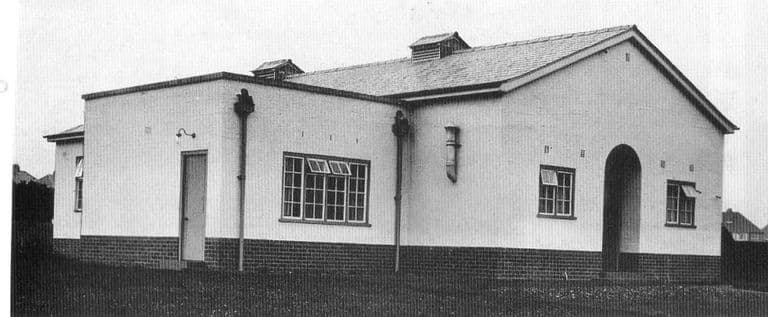
In 1938, on the recommendation of the National Fitness Council’s grants committee, the Board of Education offered the Birmingham Settlement a grant for new buildings in Summer Lane “and for new branch, Kingstanding”. By the late 1940s the branch was established at 610 Kingstanding Road.
What went on at the Settlement
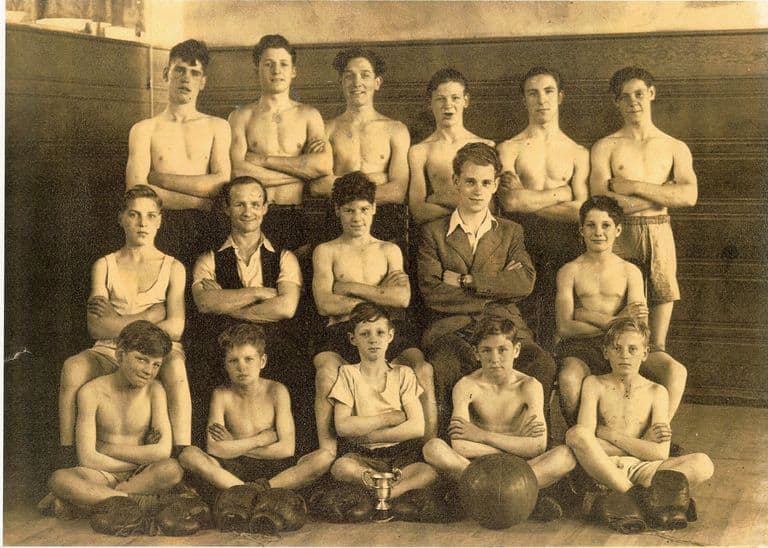
By the late 1940s the Kingstanding Settlement was a busy place. For women there were handicrafts, Make Do and Mend and keep fit classes; there was a mixed orchestra and a drama group. For children there were schoolboys’ and schoolgirls’ clubs, Scouts, Cubs, Guides and Brownies, and a youth club. Its young people could hold their own, too: in March 1949 a team from the Birmingham Settlement (Kingstanding) took third place in the final of a Birmingham youth public-speaking competition, debating whether a federation of English-speaking nations would guarantee world peace.
The building served the whole city too. In 1948 and 1949 the council’s Education Committee used “The Settlement, 610 Kingstanding Road” as one of its occupation centres for children with learning disabilities, open Monday to Friday. Demand was so great that some children travelled to Kingstanding from as far as Alum Rock and Glebe Farm, changing buses on the way.
The people who ran it
The branch had its own resident warden. In 1949 the warden was Miss N. E. Fear. In 1952 the Settlement advertised nationally for a new resident warden for “the Birmingham Settlement, Kingstanding… Situated on large housing estate.”
From 1955 to 1971 the warden was John Blamire. In 1971 he became organiser of the Birmingham Settlement Money Advice Centre — work that would become the Settlement’s best-known achievement.
A pioneer in money advice
The Settlement’s best-known achievement came from its money advice work. In the early 1970s it set up what a 1995 Policy Studies Institute report calls “the first money advice service, offering debt counselling and case work to individuals in debt” — a centre its historian describes as “believed to be the first of its kind in the world.” In 1987, with the Money Advice Association, it set up Housing Debtline, the UK’s first telephone advice line for people with debt problems; it was renamed National Debtline in 1990. In 1992 the Settlement launched Business Debtline. Both helplines are now run by the Money Advice Trust.
Closing — and coming home
In the early 1970s, Glasby records, “a series of financial problems prompted closure and amalgamation with Summer Lane.” The Kingstanding branch closed. The building on Kingstanding Road was later leased to the city council and became known locally as the 610 Community Centre — even though it actually stands at number 600.
In recent years it returned to Birmingham Settlement. In December 2023 the charity moved its regular programme of activities from Aston to Kingstanding, and the centre — now the Birmingham Settlement Sports & Community Centre, with two halls, classrooms, a community gym, a multi-purpose sports pitch, meeting rooms and a playing field — is today the charity’s registered office. More than ninety years after it first came to the estate, Birmingham Settlement is back at the heart of Kingstanding.
From the Heritage Archive
Sources. Jon Glasby, “Poverty and opportunity: one hundred years of the Birmingham Settlement”, in R. Gilchrist and T. Jeffs (eds), Settlements, Social Change and Community Action (Jessica Kingsley, 2001), and his summary on infed.org (1999), from his book Poverty and Opportunity: 100 Years of the Birmingham Settlement (Brewin Books, 1999); Birmingham Settlement, “History of the Settlement” (archived website, extracts from Glasby); Lord Beveridge and A. F. Wells (eds), The Evidence for Voluntary Action (1949), Provincial Settlements no. 1; Carl Chinn, Homes for People: Council Housing and Urban Renewal in Birmingham (1999); The Building, 19 August 1938; Birmingham Education Committee, Special Schools After-Care Sub-Committee reports, 1948 and 1949; Whitaker’s Almanack, 1949; New Statesman, 22 November 1952; Eighty Thousand Adolescents (Westhill Training College, 1950); John Blamire, Dealing with Debt (Birmingham Settlement, 1984); E. Kempson, Money Advice and Debt Counselling (Policy Studies Institute, 1995); Money Advice Trust, “History”; Birmingham Settlement website (2023–2026); Erdington Local, “Community Spotlight: Birmingham Settlement Sports and Community Centre” (September 2026); Companies House, company 01946604. The Settlement’s archive is held at the Library of Birmingham (MS 162).
Comments
Comments will load here.